
Precious metals markets experienced a dramatic resurgence on Monday, January 6, 2026, as gold prices sprinted to more than a one-week high, edging closer to their record peak amid geopolitical turmoil sparked by the United States’ capture of Venezuelan President Nicolás Maduro over the weekend. The dramatic development sent shockwaves through global financial markets, triggering a widespread flight to safety as investors scrambled to reassess risk across multiple asset classes.
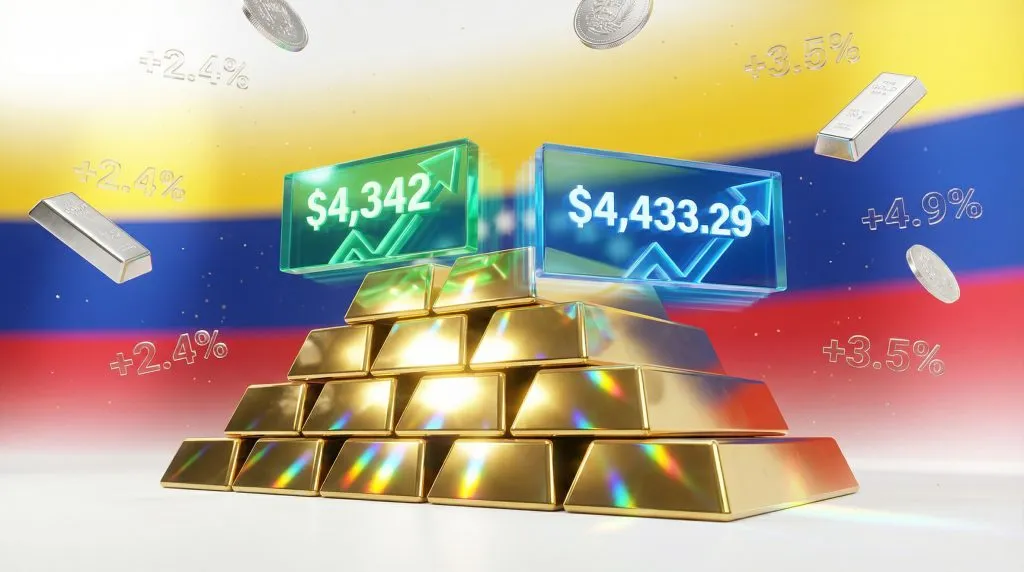
Spot gold climbed as much as 2.9% on Monday, surging above $4,455 an ounce, while U.S. gold futures for February delivery gained 2.6% to $4,443 an ounce by midday trading in New York. The precious metal’s surge represented its highest level since December 29, bringing prices to within approximately $100 of the all-time record of $4,549.71 set on December 26, just days before the end of 2025.
Build the future you deserve. Get started with our top-tier Online courses: ACCA, HESI A2, ATI TEAS 7, HESI EXIT, NCLEX-RN, NCLEX-PN, and Financial Literacy. Let Serrari Ed guide your path to success. Enroll today.
Venezuela Crisis Triggers Market Upheaval
The catalyst for Monday’s precious metals rally was the extraordinary weekend operation in which the United States attacked Venezuela and deposed President Nicolás Maduro, in what analysts described as Washington’s most direct intervention in Latin America since the 1989 invasion of Panama. The military action, carried out by Delta Force special operations units, resulted in Maduro and his wife being detained and flown out of the country, leaving the future governance of the oil-rich South American nation deeply uncertain.
President Donald Trump announced on Truth Social that the operation involved large-scale strikes and confirmed that Venezuelan President Maduro had been captured. Trump said the U.S. plans to “run” Venezuela after ousting Maduro, leaving the future governance of the South American nation uncertain. He said Washington required “total access” to the country, including its vast oil reserves.
“Gold is benefiting from the U.S.-Venezuela escalation over the weekend. This has increased demand for the safe-haven precious metal as it adds to uncertainties market participants are already grappling with,” said Zain Vawda, analyst at MarketPulse by OANDA.
The geopolitical shock was compounded by President Trump’s warning on Sunday that he could order another strike if Venezuela does not cooperate with U.S. efforts to open up its oil industry and stop drug trafficking. Even more unsettling for markets, Trump suggested that Colombia and Mexico could face military action if they do not reduce the flow of illicit drugs into the United States.
“The Trump administration’s immediate comments about Mexico in the aftermath of the Venezuela operation leave market participants with questions regarding future operations in Latin America, which should keep the demand for gold elevated in the near term,” Vawda added, highlighting how the uncertainty extends well beyond Venezuela’s borders.
Geopolitical Backdrop Reinforces Safe-Haven Appeal
The Venezuela episode “reinforced a backdrop of geopolitical uncertainty,” said Christopher Wong, an analyst at Oversea-Chinese Banking Corp. in Singapore. However, he noted that immediate risks might be limited as “developments in Venezuela point to a relatively quick closure, rather than a prolonged military conflict.”
Gold often rallies as geopolitical tensions spike, although the effect is often short-lived unless tensions broaden or persist. Alexander Zumpfe, a precious metals trader at Heraeus Metals Germany, emphasized this point: “The situation around Venezuela has clearly reactivated safe-haven demand, but it comes on top of existing concerns about geopolitics, energy supply and monetary policy.”
In addition to events in Venezuela, Trump also used the weekend to restate his ambitions for Greenland, part of NATO ally Denmark’s territory, adding another layer of geopolitical complexity that markets must digest. The combination of actual military intervention in Latin America and provocative statements about territorial ambitions in the Arctic creates a particularly unsettling environment for investors already navigating elevated global tensions.
Zumpfe further noted that “Another move toward new record highs would likely be triggered if geopolitical tensions broaden further or if incoming U.S. data reinforces expectations that the Fed will have to ease more aggressively than currently priced.” This observation underscores that while the Venezuela crisis provides an immediate catalyst, the precious metals market remains finely tuned to multiple drivers beyond geopolitics alone.
Broader Precious Metals Rally
The flight to safety extended well beyond gold, with silver experiencing particularly dramatic gains. Spot silver surged as much as 7% on Monday, jumping to $75.42 an ounce after hitting a record $83.62 on December 29. The white metal’s explosive move reflected both its traditional safe-haven appeal and its unique positioning as a critical industrial commodity.
Platinum also participated in the rally, gaining 3.1% to $2,208.62 an ounce, having touched a record high of $2,478.50 just a week earlier. Palladium rose 2.3% to $1,676.12, rounding out a comprehensive advance across the precious metals complex that underscored the breadth of safe-haven demand triggered by the Venezuela crisis.
The surge in precious metals also manifested in regional markets. In India, gold futures on the Multi Commodity Exchange hit a record high of Rs 1,40,465 per 10 grams, with domestic rates remaining firm due to geopolitical concerns and the rupee trading at all-time lows. The Indian market’s reaction highlighted how the Venezuela crisis reverberated across global financial centers, affecting both developed and emerging market participants.
Gold’s Historic 2025 Performance Provides Context
Monday’s surge built upon what was already an extraordinary year for gold in 2025. The precious metal climbed by about 64% last year, driven to the biggest annual gain since 1979 by a powerful combination of Federal Reserve rate cuts, heightened geopolitical tensions, strong central bank buying, and rising holdings at exchange-traded funds.
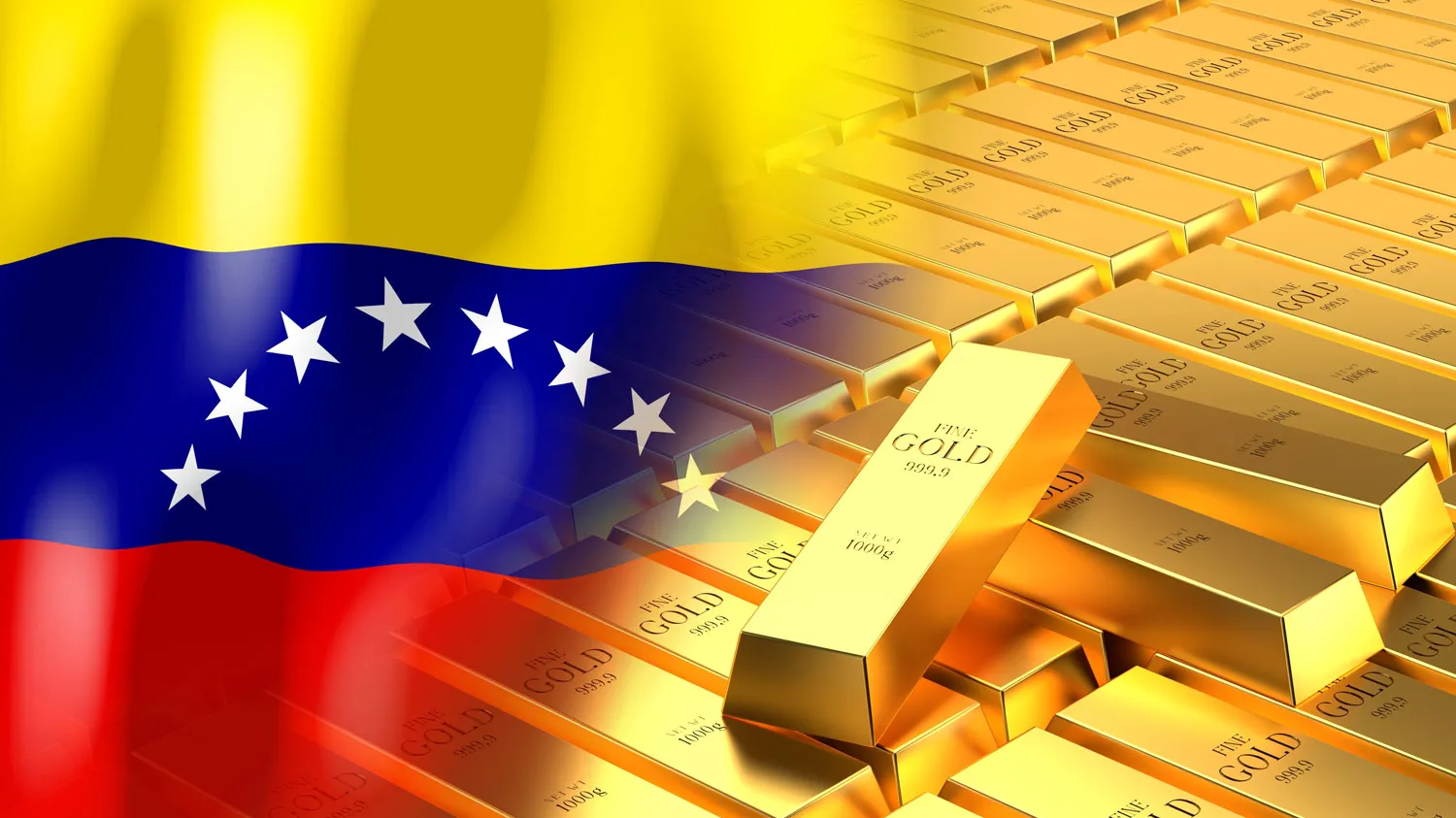
Gold surged nearly 70% in 2025—its biggest yearly gain since 1979—cementing its status as the standout hedge amid global uncertainty. The metal’s stellar performance reflected a confluence of favorable conditions that analysts expect will persist, if not intensify, through 2026.
Several structural factors underpinned gold’s 2025 rally. Central banks purchased over 1,000 tonnes of gold annually since 2022—roughly twice the decade-long average—with emerging economies notably China, Turkey, Poland, and India leading this trend. This behavior underscores a global realignment in currency reserves as the dollar’s share of official reserves declines while gold’s share continues to rise as a neutral, non-sovereign store of value.
The exchange-traded fund channel provided another crucial pillar of support. After several years of ETF outflows, Western investment demand for gold decisively returned in 2025, with inflows into gold ETFs strengthening month over month. Global gold ETF holdings reached record levels, with inflows of $26 billion in the third quarter alone, bringing total assets under management to $472 billion.
These massive inflows reflected renewed institutional confidence in gold’s role as both an inflation hedge and a strategic portfolio diversifier. Notably, gold surpassed the share of U.S. Treasuries in central bank reserves for the first time since 1996—a powerful signal of confidence in the metal’s long-term value and a historic reversal in reserve asset preferences.
Monetary Policy Expectations Shape Near-Term Outlook
While geopolitical developments dominate current headlines, monetary policy expectations remain a critical driver of precious metals pricing. Markets currently anticipate at least two cuts to U.S. interest rates in 2026, with investors hoping for further clues on central bank monetary policy from December’s non-farm payrolls report scheduled for release on Friday.
Gold’s performance in a low-interest-rate environment is particularly strong due to its non-yielding nature. When real interest rates—the nominal rate minus inflation—are low or negative, the opportunity cost of holding gold diminishes significantly, making it more attractive relative to interest-bearing assets like bonds.
The Federal Reserve entered 2025 with the federal funds rate at 5.25% to 5.50%, but concluded the year with dramatic policy shifts. The Fed implemented three rate cuts during 2025, bringing rates down to support economic growth as inflation moderated toward the central bank’s 2% target. The September pivot marked a turning point, with gold rallying from around $3,000 to over $4,300 as markets anticipated the policy shift.
The relationship between Fed policy and gold prices, however, has grown more complex. Despite rates remaining relatively high compared to the previous decade, gold shattered records, crossing $4,000 per ounce in late 2025. This signaled a structural shift where sovereign debt concerns and central bank buying outweighed the traditional opportunity cost model that had historically governed gold’s behavior.
Silver’s Extraordinary 2025: A Market Transformed
If gold’s 64% gain in 2025 was impressive, silver’s performance was nothing short of spectacular. Silver soared by 147% last year, vastly outpacing gold and virtually every other major asset class. The white metal’s explosive rally reflected three powerful and mutually reinforcing drivers: its new designation as a U.S. critical mineral, persistent supply deficits, and surging investor and industrial demand.
The critical mineral designation represented a paradigm shift in how silver is viewed by policymakers and markets. The U.S. Geological Survey officially added silver to its list of “critical minerals” in November 2025, recognizing that silver is essential to the economic and national security of the United States, has a supply chain vulnerable to disruption, and serves an essential function in manufacturing products critical to national security.
This designation was not merely symbolic. It unlocked potential government stockpiling, production subsidies, accelerated permitting for domestic projects, and possible tax incentives—all of which could fundamentally alter long-term supply-demand dynamics. Silver’s essential role in solar panels, electric vehicles, semiconductors, and defense systems makes supply security a national priority, especially given that the U.S. relies on imports for approximately 70% of its silver needs and faces Chinese dominance in silver refining capacity.
Supply Deficit Creates Structural Scarcity
Beyond policy support, silver faces a deepening structural supply crisis that has fundamentally altered market dynamics. Demand outstripped silver supply for the fourth consecutive year in 2024, with the structural market deficit reaching 148.9 million ounces. This drove the four-year cumulative market shortfall to 678 million ounces—equivalent to 10 months of global mining supply.
Analysts forecast another supply deficit in 2025, marking the fifth straight year of shortage, with projections indicating this pattern will persist into 2026. For the 2021-2025 period, the cumulative deficit reached almost 820 million ounces—a staggering imbalance that has steadily drained above-ground inventories and created acute physical scarcity in key trading hubs.
The supply constraints stem from multiple factors. Global silver mine production is projected to yield 835 million ounces in 2025, representing a 7.23% decrease compared to 2016 levels. This long-term decline in primary silver supply reflects persistent challenges including the maturation of major ore bodies, declining ore grades at mature operations, extended timelines for new mine development, fluctuating operational costs, and evolving regulatory environments in key silver-producing regions.
A critical structural factor limiting supply response is that approximately 71% of mined silver supply comes as a byproduct from polymetallic gold, lead, zinc, and copper mines. This means that even significant increases in silver prices are unlikely to influence production plans, which remain primarily driven by the economics of the base metals. Only about 29% of silver supply comes from primary silver mines, where production is more directly responsive to silver prices, but these operations face their own challenges including declining ore grades and rapidly rising all-in sustaining costs.
Industrial Demand Accelerates Green Energy Transition
On the demand side, industrial consumption has reached unprecedented levels, driven primarily by the global energy transition. About 60% of global silver offtake is for industrial purposes, with industrial demand for silver setting a record in 2024 and continuing to grow in 2025.
Solar panel production represents the single largest source of industrial silver demand growth. The solar photovoltaic sector requires significant quantities of silver for the conductive paste used in solar cells, and strong growth in solar panel installations continues to support industrial demand. The International Energy Agency projects solar capacity will quadruple by 2030, ensuring sustained demand growth from this sector alone.
Electric vehicle production provides another powerful demand driver. Electric vehicles require 25-50 grams of silver per unit, used in battery management systems and power electronics. The Silver Institute estimates silver demand by the automotive industry will increase at a 3.4% compound annual growth rate between 2025-2031, with demand from EVs overtaking internal combustion engines by 2027.
The artificial intelligence boom has created yet another demand channel. Silver’s exceptional conductivity properties make it essential for AI servers, switches, multi-layer ceramic capacitors, electronic components, circuit boards, and bonding wires—all critical infrastructure for high-frequency data transmission and advanced computing applications.
One decision can change your entire career. Take that step with our Online courses in ACCA, HESI A2, ATI TEAS 7, HESI EXIT, NCLEX-RN, NCLEX-PN, and Financial Literacy. Join Serrari Ed and start building your brighter future today.
Market Dynamics Signal Tightening Physical Availability
The combination of persistent deficits and surging industrial demand has created increasingly tight conditions in physical silver markets. In 2025, mine production failed to meet demand, resulting in a deficit estimated at 115-120 million ounces. This deficit accelerated the depletion of physical inventories, most notably in London, the world’s primary silver trading hub.
Market structure indicators confirm the tightening. COMEX futures have traded above London prices for much of 2025, signaling a liquidity crisis in physical silver—a condition known as backwardation that typically indicates acute near-term scarcity. Exchange-traded product inflows have surged, with global silver ETF holdings approaching 1 billion ounces, representing approximately 40% of annual mine production.
The situation faces additional complications from geopolitical factors. China’s decision to impose government licensing for all silver exports starting January 1, 2026, represents a seismic shift in global supply dynamics that could further constrain availability and add upward pressure to prices. Combined with silver’s new critical mineral status in the United States, these policy developments suggest that silver supply chains are increasingly viewed through a strategic lens rather than purely commercial considerations.
Institutional Forecasts Point to Sustained Strength
Major financial institutions have sharply revised their precious metals forecasts upward in response to the confluence of supportive factors. For gold, J.P. Morgan Global Research forecasts ongoing robust investor demand, with around 250 tonnes of inflows into ETFs expected in 2026. The bank projects gold prices pushing toward $5,000 per ounce by the fourth quarter of 2026, with $6,000 per ounce a possibility in the longer term.
Goldman Sachs projects gold reaching $4,900 per ounce by the end of 2026, citing central bank buying and ETF inflows as primary drivers. Morgan Stanley revised their forecast to $4,400 per ounce, viewing gold as a barometer for geopolitical risk. Standard Chartered expects gold prices to hit $4,800 per ounce this year, with analysts noting that developments in Venezuela might expedite this appreciation.
For silver, institutional optimism is even more pronounced given the metal’s supply constraints and industrial demand growth. Goldman Sachs now expects silver to average $85-$100 per ounce in 2026, noting that the structural deficit will make sustained dips below approximately $70 unlikely. UBS similarly forecasts around $95 per ounce for 2026, citing ongoing Federal Reserve easing and a weaker dollar boosting demand.
Citigroup has flagged the potential for silver prices to reach $110 per ounce by the second half of 2026 if EV-related demand surges and physical shortages intensify. Some analysts have suggested even more aggressive scenarios, with speculation that silver could potentially reach $150 per ounce if multiple favorable conditions align simultaneously.
Market Positioning and Investment Flows
Current market positioning suggests significant room for further precious metals appreciation. Global gold ETF holdings remain 18% below previous peaks, indicating substantial capacity for additional inflows. Gold represents only approximately 2-3% of investor financial assets globally, well below historical allocations during previous periods of heightened inflation concern or geopolitical stress.
The composition of demand is also shifting in ways that support sustained strength. Central bank demand, which has been a crucial pillar of support, shows no signs of abating. Underpinning J.P. Morgan’s price forecasts is continued strong investor and central bank gold demand, projected to average around 585 tonnes per quarter in 2026.
For silver, investor holdings via ETFs, bars and coins, and COMEX futures reached around 2.8% of total assets under management in the third quarter of 2025. Analysts see potential for this share to rise toward 4-5% over coming years, which would represent substantial additional demand given the relatively small size of the silver market compared to other major asset classes.
The retail and institutional bifurcation in silver demand is particularly notable. While jewelry demand showed signs of weakness in 2025 as consumers reacted to high prices, investment and industrial demand remained robust. This pattern suggests that silver’s rally is underpinned by structural factors—energy transition imperatives and strategic stockpiling—rather than ephemeral speculative enthusiasm.
Currency and Real Yield Dynamics
The dollar’s trajectory remains a critical variable for precious metals pricing. Throughout 2025, gold demonstrated an unusual pattern of rallying alongside a relatively strong dollar, breaking the traditional inverse correlation that had historically characterized their relationship. This “breakdown” highlighted that gold was being driven by factors beyond currency arbitrage—specifically, central bank buying motivated by diversification away from dollar dependence and sovereign debt concerns.
Gold prices advanced over 2% to $4,419 per ounce on Monday, while the dollar firmed modestly, with the dollar index strengthening around 0.2% to 98.662. The simultaneous advance of both gold and the dollar underscores that current precious metals strength reflects primarily geopolitical risk premium rather than simple currency debasement concerns.
Real yields—the nominal interest rate adjusted for inflation—remain another crucial consideration. When real yields are low or negative, the opportunity cost of holding non-yielding gold diminishes, making it more attractive relative to interest-bearing alternatives. Current market dynamics show real yields remaining elevated, partly reflecting the U.S.’s heavy debt burden, yet gold continues to perform strongly, suggesting that other factors have become more important drivers than traditional yield relationships.
Risk Assessment and Market Signals
While precious metals have surged on the Venezuela news, not all market indicators suggest panic or structural repricing of global risk. Credit markets, which often flag stress earlier than equities, have shown relatively muted reactions. High-yield spreads and emerging market sovereign spreads—key indicators of risk appetite—have not widened dramatically, suggesting that markets view the Venezuela episode as a discrete event rather than the beginning of broader instability.
“At this stage, the price action points to a temporary geopolitical risk premium rather than a structural shift,” noted analysts at Fibonacci Asset Management. This assessment suggests that while precious metals may consolidate recent gains, a return to pre-Venezuela levels seems unlikely given the multitude of other supportive factors beyond the immediate crisis.
Bond markets provide another window into risk assessment. If Venezuela were triggering a broader repricing of risk, it would manifest in falling bond yields and rising inflation expectations—neither of which has occurred in a meaningful way. Inflation expectations remain stable, suggesting no material change in the growth or inflation outlook based on current developments.
However, the longer-term risk extends beyond Venezuela itself to whether the episode changes political behavior in other parts of the world. “Trump’s return to the White House has ripped up the underlying structures, alliances and rules which Western business and capital thought they could rely on,” said Adrian Ash, director of research at BullionVault. This observation captures a deeper concern that the Venezuela intervention signals a more unpredictable and intervention-prone U.S. foreign policy that could generate recurring safe-haven demand.
Platinum Group Metals Participate in Rally
While gold and silver dominated headlines, platinum gained 3.1% to $2,208.62 an ounce, having touched a record high of $2,478.50 a week earlier. Platinum’s strength reflects both safe-haven demand and improving fundamentals in the automotive sector, where the metal is used in catalytic converters for diesel vehicles and, increasingly, in hydrogen fuel cell applications.
Palladium rose 2.3% to $1,676.12, continuing its recovery from multi-year lows reached in 2024. Palladium demand is heavily concentrated in gasoline catalytic converters, and the metal has struggled as the automotive industry’s shift toward electric vehicles threatens long-term demand. However, near-term supply constraints and substitution dynamics with platinum have provided price support.
The platinum group metals’ participation in Monday’s rally underscores the breadth of safe-haven demand triggered by the Venezuela crisis, with investors seeking exposure across the precious metals complex rather than concentrating exclusively in gold.
Oil Market Implications
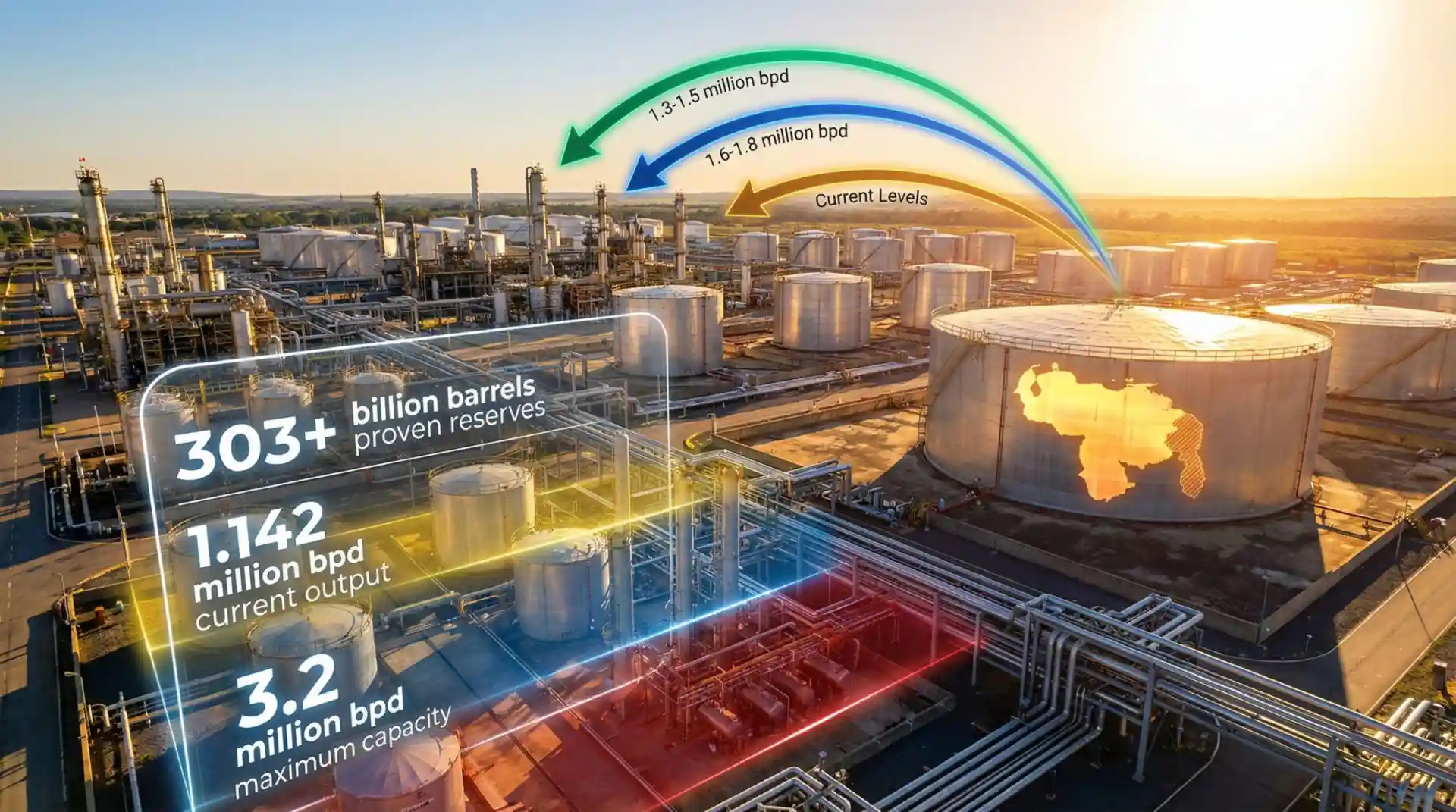
The Venezuela crisis carries particular significance for energy markets given the country’s status as a major oil producer, though impacts thus far have been relatively contained. Oil prices are expected to see only a limited reaction to the United States’ military action, with market experts saying the incident adds a risk premium but is unlikely to disrupt global crude supply in a meaningful way.
Venezuelan oil exports have already been under pressure due to sanctions and logistical constraints, reducing the scope for a fresh supply shock. The U.S. naval blockade imposed in early December had already disrupted shipping routes, delayed exports, and cut revenues for the Maduro government. State oil company PDVSA had reportedly begun disabling producing wells in the Orinoco Belt as storage capacity became constrained.
Brent crude could rise to between $62 and $65 per barrel if infrastructure is threatened, according to commodity analysts. However, global oil markets remained relatively stable on Monday, suggesting that traders do not anticipate major supply disruptions from the Venezuela situation.
Looking Ahead: Sustaining the Rally
As markets look beyond the immediate Venezuela shock, the question becomes whether precious metals can sustain their recent gains or whether prices will moderate as the geopolitical premium fades. Several factors suggest that support should remain firm even if Venezuela-specific concerns dissipate.
The structural drivers that propelled gold to a 64% gain in 2025 remain firmly in place: central bank diversification away from dollar reserves, elevated geopolitical tensions across multiple theaters, accommodative monetary policy from major central banks, and ongoing concerns about sovereign debt sustainability. For silver, the critical mineral designation, persistent supply deficits, and accelerating industrial demand from green energy applications provide fundamental support independent of short-term geopolitical developments.
Friday’s release of December non-farm payrolls data will provide crucial insight into the Federal Reserve’s likely policy trajectory. Markets currently expect at least two rate cuts in 2026, but the timing and magnitude of those cuts remain uncertain. Stronger-than-expected employment data could reduce rate cut expectations and create near-term headwinds for precious metals, while weak data could reinforce dovish Fed expectations and provide additional tailwinds.
The geopolitical landscape beyond Venezuela also warrants close monitoring. Ongoing tensions involving Iran, the lack of a lasting agreement in the Russia-Ukraine conflict, continued uncertainty around Gaza, and Trump’s provocative statements about territorial ambitions all contribute to an environment where safe-haven demand could persist or intensify regardless of how the Venezuela situation evolves.
Investment Implications and Strategic Positioning
For investors, the current precious metals environment presents both opportunities and challenges. The Venezuela-driven surge has pushed gold to within striking distance of its all-time high and lifted silver substantially from its late-December record, creating questions about optimal entry points for new allocations.
Technical analysts note that $75 to $76 represents a key zone for silver’s short-term trend continuation, while $69.60 to $71.20 stands out as the main support band. For gold, sustained moves above the December 26 record of $4,549.71 would likely signal a new phase of strength, while consolidation between $4,300 and $4,500 appears more probable in the near term absent additional geopolitical shocks or dramatic shifts in monetary policy expectations.
Portfolio strategists increasingly emphasize precious metals’ role as strategic diversifiers rather than tactical trades. Gold’s share of total global financial assets has increased to about 2.8% in the third quarter of 2025, up from historical lows but still well below levels that prevailed during previous periods of economic stress. This suggests room for further allocation increases as investors continue recognizing gold’s value in providing uncorrelated returns and downside protection.
For silver, the investment case extends beyond simple commodity exposure to encompass strategic positioning within a transforming global economy. Companies with secure, low-cost silver production capacity, particularly in stable jurisdictions, offer leveraged exposure to the metal’s price appreciation while also benefiting from the policy support and strategic importance conveyed by the critical mineral designation.
Conclusion: Precious Metals Reassert Strategic Importance
Monday’s precious metals surge in response to the Venezuela crisis serves as a powerful reminder that gold, silver, and related metals continue to perform their traditional role as safe-haven assets in times of geopolitical upheaval. The magnitude of the response—with gold advancing nearly 3% and silver surging 7% in a single session—underscores the depth of concern about U.S. intervention in Latin America and broader questions about the predictability of international relations under the Trump administration’s foreign policy approach.
Yet the Venezuela episode represents just one chapter in a much larger story of precious metals reasserting their strategic importance in the global financial system. The structural forces that drove gold’s 64% gain and silver’s 147% surge in 2025—central bank reserve diversification, persistent supply deficits, industrial demand growth, monetary policy accommodation, and sovereign debt concerns—remain firmly intact and likely to intensify through 2026.
As investors position for an uncertain year ahead, precious metals offer rare exposure to assets whose value proposition strengthens precisely when other investments face greatest stress. Whether the current rally extends to new records or consolidates recent gains before the next advance, the fundamental case for strategic precious metals allocation has rarely appeared more compelling. The Venezuela crisis may have provided the catalyst for this week’s surge, but the underlying drivers suggest this precious metals bull market has substantially further to run.
Ready to take your career to the next level? Join our Online courses: ACCA, HESI A2, ATI TEAS 7 , HESI EXIT , NCLEX – RN and NCLEX – PN, Financial Literacy!🌟 Dive into a world of opportunities and empower yourself for success. Explore more at Serrari Ed and start your exciting journey today! ✨
Track GDP, Inflation and Central Bank rates for top African markets with Serrari’s comparator tool.
See today’s Treasury bonds and Money market funds movement across financial service providers in Kenya, using Serrari’s comparator tools.
photo source: Google
By: Montel Kamau
Serrari Financial Analyst
7th January, 2026