
The Nairobi Securities Exchange has opened 2026 with exceptional momentum, pushing total market capitalization to approximately KSh 3 trillion for the first time in the bourse’s history. This milestone reflects a remarkable transformation in Kenya’s capital markets, following a blockbuster 2025 performance that saw the exchange deliver some of the strongest returns in more than a decade while fundamentally reshaping investor sentiment toward Kenyan equities.
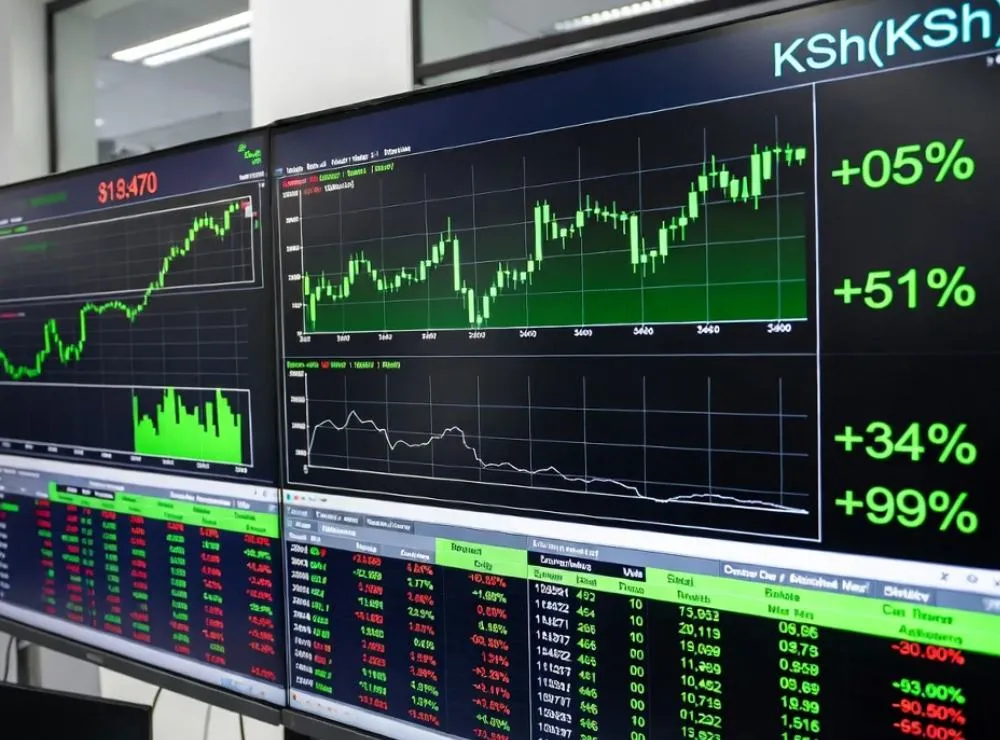
At a recent trading session, market participants witnessed an extraordinary surge in activity, with over 28 million shares changing hands and turnover rising by more than 250% compared with previous sessions. This dramatic increase in liquidity was driven primarily by blue-chip counters in the banking and telecommunications sectors, with flagship stocks such as Safaricom, KCB Group, NCBA, and Co-operative Bank dominating trading volumes and contributing substantially to the overall market’s upward trajectory.
Build the future you deserve. Get started with our top-tier Online courses: ACCA, HESI A2, ATI TEAS 7, HESI EXIT, NCLEX-RN, NCLEX-PN, and Financial Literacy. Let Serrari Ed guide your path to success. Enroll today.
The Exceptional 2025 Performance
The current rally builds upon an extraordinary foundation established throughout 2025, when the NSE delivered what market analysts have described as a “record-breaking year” for Kenyan equities. The NSE 20 Share Index surged 56.13% to close 2025 at 3,139.19 points, representing one of the strongest annual performances in the exchange’s modern history. By January 5, 2026, this index had continued climbing to 3,144.48 points, underscoring the sustained strength of blue-chip companies as the new year commenced.
The NSE All-Share Index (NASI), which provides a more comprehensive measure of market performance by tracking all listed equities regardless of capitalization, gained over 50% during 2025, posting its strongest annual gain since 2013. This broad-based rally indicates that the market’s strength extended well beyond a handful of heavily traded counters, with investor wealth increasing across multiple sectors and company sizes.
Total market capitalization rose by nearly KSh 1 trillion during 2025, reflecting both price appreciation in existing listings and renewed confidence in the exchange as an investment destination. According to NSE Chairman Kiprono Kittony, market capitalization increased by 48% in 2025, soaring from KSh 1.968 trillion to KSh 3 trillion, underpinned by a favorable macroeconomic environment and heightened investor participation in both equities and fixed-income markets.
Sectoral Performance and Market Leaders
The 2025 rally was characterized by exceptional performances across multiple sectors, with certain counters delivering triple-digit returns that multiplied investor capital several-fold. A total of 13 listed companies delivered returns exceeding 100% during the year, led by Sameer Africa, Uchumi Supermarkets, Home Afrika, and remarkably, the Nairobi Securities Exchange itself—a meta indicator of market confidence given that NSE PLC is itself a listed entity.
Among individual stocks, Sameer Africa emerged as the standout performer, transforming early investors’ capital by more than five times, though market analysts note that much of the rally in previously distressed counters was driven by speculative trading and sentiment rather than fundamental improvements in business operations. Uchumi Supermarkets, a retailer facing existential challenges including an adverse court decision concerning the Kasarani Mall Property dispute with Kenya Defence Forces, nonetheless saw its share price surge from KSh 0.20 at the start of 2025 to KSh 1.85 at its December peak—a staggering gain that reflected more investor speculation than operational recovery.
More fundamentally sound performers included established blue-chip companies. KenGen advanced 128.6% during 2025, benefiting from tariff adjustments and improved cash flow expectations in Kenya’s power sector. Car & General rose 126.4%, supported by improved margins and demand for power and equipment solutions. Kenya Re recorded a 124.2% increase, reflecting improved underwriting discipline and sector recovery in the reinsurance market.
Perhaps most significantly for the broader market, Safaricom—Kenya’s telecommunications and mobile money giant—saw its market capitalization push above the KSh 1 trillion mark, a psychological milestone that reinforced the company’s status as East Africa’s most valuable publicly traded corporation. James Kamanja, a market analyst quoted extensively during the rally, observed that “we have not seen such a year in the market. Many companies have experienced record-breaking growth.”
Economic Context and Macro Environment
The NSE’s exceptional performance occurred against a backdrop of improving macroeconomic conditions in Kenya. The country’s economy recorded stronger growth in the third quarter of 2025, expanding by 4.9% compared to 4.2% during the same period in 2024. This growth was driven by rebounds in key sectors including construction, which recovered from a 2.6% contraction in Q3 2024 to post 6.7% expansion, and mining and quarrying, which surged 16.6% after a 12.2% decline the previous year.
The NSE 20 Share Index rose sharply from 1,776 points in September 2024 to 2,973 points in September 2025, reflecting the correlation between improving economic fundamentals and equity market performance. Meanwhile, the Central Bank of Kenya revised the Central Bank Rate downward to 9.50% in August and September 2025, from 12.75% in September 2024, creating a more accommodative monetary environment that supported both economic activity and investment returns.
This combination of GDP growth averaging 4.7% for the year, stabilized interest rates, manageable public debt levels, and a stronger Kenyan shilling—which helped bolster investor confidence—coalesced to create favorable conditions for equity market appreciation. According to NSE Chairman Kittony, speaking in an exclusive interview with CNBC, these macroeconomic improvements positioned the NSE as the top performer among African exchanges in terms of return on investment for 2025.
The Shift from Fixed Income to Equities
A critical factor driving the equity market’s resurgence has been a fundamental portfolio reallocation by Kenyan investors from fixed-income securities to stocks. As yields on Treasury bills and bonds compressed, investors increasingly sought the higher returns and growth potential offered by equities, particularly in a market delivering double-digit and in many cases triple-digit returns.
Trading volumes in both equities and fixed-income securities showed spectacular growth during 2025, with equities trading leaping 40% to reach $155 billion, while bond trading surged 70%. This simultaneous expansion in both markets reflects deepening liquidity and increasing sophistication among Kenyan investors, who are now more comfortable allocating capital across different asset classes based on relative value and risk-return considerations.
The launch of Kenya’s first Exchange Traded Fund marked another step toward market sophistication, showcasing deliberate policy measures and strategic planning by the NSE in concert with the Kenyan government to expand investment product offerings and attract a broader investor base. This development follows successful innovations in the fixed-income space, including the Central Bank’s DhowCSD platform launched in 2023 and improvised to allow payments via M-Pesa in November 2025, which has demonstrated Kenyan policymakers’ commitment to democratizing access to capital markets.
Kenya Pipeline Company: The Anticipated IPO
Structural developments are adding fresh momentum to Kenya’s capital markets as 2026 progresses. The long-anticipated listing of Kenya Pipeline Company represents perhaps the most significant upcoming event for the NSE, with the government having set a March 31, 2026 deadline for the completion of KPC’s initial public offering.
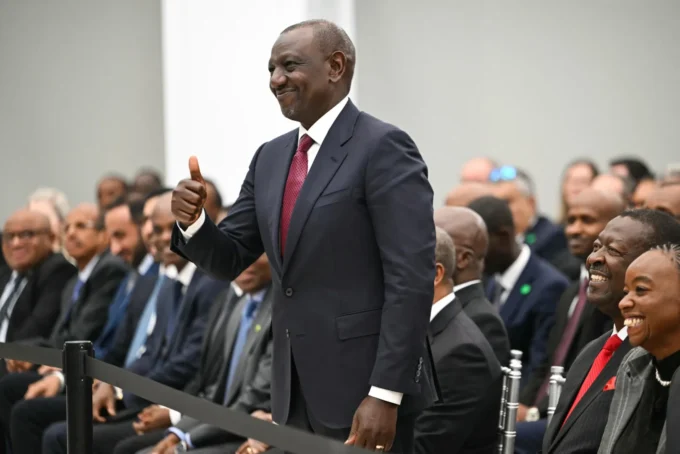
President William Ruto has actively championed this privatization initiative, announcing in early January that KPC shares would be listed on the NSE, opening the door for ordinary Kenyans and investors to buy shares and benefit from ownership in one of the country’s most strategic and profitable state corporations. The President emphasized the inclusive nature of the offering during an event in West Pokot, stating: “We have said the shares will be sold to everyone. Even if you have Sh200 or Sh300, come and buy, so that when profits are announced, you are part of it.”
KPC plays a critical role in the transportation and storage of petroleum products across Kenya and the wider East African region, operating a pipeline network linking the port of Mombasa to major towns and ensuring steady fuel supply throughout the country. The government plans to sell a 65% stake in KPC while retaining a 35% shareholding, with the transaction expected to raise approximately KSh 100 billion for budget support and critical development priorities.
The Privatisation Commission is currently seeking the services of transaction advisors to lay the framework for the transaction, along with a lead and co-sponsoring stockbroker, legal advisors, an advertising agent, a public relations firm, a receiving bank, and a registrar. The commission must ensure that all liabilities and risks affecting KPC’s valuation—including unresolved compensation claims totaling Sh 3.8 billion from Makueni County residents arising from historical grievances linked to pipeline operations—are comprehensively assessed, transparently disclosed, and factored into the transaction valuation before proceeding.
If completed as scheduled, the KPC share offer will mark one of the most significant listings at the NSE in recent years. The exchange has not had an IPO since October 2015, when the Stanlib Fahari real estate investment trust was listed, while the last successful privatization by the government was Safaricom’s initial public offering in 2008—meaning that nearly a decade will have passed without a primary listing on the NSE if KPC proceeds as planned.
One decision can change your entire career. Take that step with our Online courses in ACCA, HESI A2, ATI TEAS 7, HESI EXIT, NCLEX-RN, NCLEX-PN, and Financial Literacy. Join Serrari Ed and start building your brighter future today.
Ziidi Trader: Democratizing Stock Market Access
Concurrent with the anticipated KPC listing, innovative trading channels are being introduced to dramatically widen access to Kenya’s capital markets. From January 2026, investors will be able to buy and sell NSE shares directly via M-Pesa through the new Ziidi Trader mobile platform, a collaboration between Safaricom and the NSE designed to democratize stock market participation and eliminate traditional barriers to retail investment.
Currently undergoing pilot testing with both NSE and Capital Markets Authority approvals, Ziidi Trader is scheduled to go fully live in January 2026, potentially bringing stock market investing to M-Pesa’s massive user base of 37.91 million one-month active customers as of September 2025. The platform will be embedded within the ubiquitous M-Pesa app and will deliver comprehensive features including personalized watchlists, customizable price alerts, and sophisticated portfolio tracking tools.
According to NSE Chief Executive Officer Frank Mwiti, the platform represents a paradigm shift in market access. “The solution makes coming to market seamless… Leveraging M-Pesa makes it fairly seamless, and there is the ability to scale given the platform is already used by millions of people,” Mwiti told a local business publication, emphasizing how the integration eliminates the need for investors to open individual share trading accounts as has been traditionally required.
The initiative builds directly on the remarkable success of the Ziidi Money Market Fund, launched in December 2024 as a collaboration between Safaricom and two fund managers, Standard Investment Bank and ALA Capital Limited. By September 2025, Ziidi MMF had attracted 1.15 million customers, representing approximately 47.9% of the 2.4 million individual investors in unit trust schemes according to the Capital Markets Authority’s June 2025 register. With assets worth KSh 12.6 billion by the end of September, the fund ranked as the 14th largest unit trust in Kenya, demonstrating the platform’s ability to leverage Safaricom’s partnership to attract users from the M-Pesa ecosystem.
The Ziidi MMF offers free deposits and withdrawals to and from M-Pesa, with a minimum investment amount set at just KSh 100—a threshold designed to maximize accessibility for Kenyans across all income levels. This precedent suggests that Ziidi Trader could similarly lower barriers to equity market participation, addressing the longstanding challenge that although over 1.4 million people are registered to invest on the NSE, only about 61,000 actively trade—representing just 4.3% of registered investors.
For Safaricom, Ziidi Trader opens another revenue stream beyond traditional person-to-person money transfers. The company earned KSh 100 million from the Ziidi MMF in its first nine months, representing approximately 0.6% of the fund’s asset base. Financial services already represent 5.2% of M-Pesa’s revenues, totaling KSh 4.6 billion in the six months ending September 2025—a 13.9% year-on-year increase that reflects the platform’s successful evolution from a payments service into a comprehensive financial services hub.
Investor Demographics and Market Structure
The composition of NSE investors has undergone a fundamental transformation over the past five years. According to NSE Chairman Kittony, the exchange has shifted from a 70/30 foreign-local investor ratio to a 65/35 mix favoring local investors—a testament to rising domestic investor interest and market maturity. This rebalancing represents both opportunity and challenge: while increased local participation provides stability and reduces vulnerability to foreign capital flight, it also highlights the need for continued investor education and market development to sustain growth.
The NSE’s five-year strategic plan targets 9 million active retail investors by 2029, an extraordinarily ambitious goal that would require increasing the current active investor base by approximately fifteenfold. Achieving this target will depend heavily on the success of initiatives like Ziidi Trader that fundamentally lower barriers to entry and make stock market investing as intuitive as everyday mobile banking transactions.
While domestic liquidity and market momentum remain strong, foreign investor participation has been mixed during the recent rally. While U.S. investors modestly increased their holdings of Kenyan equities and debt securities, some foreign funds have favored developed markets with higher risk-adjusted returns, leading to occasional net outflows. Nevertheless, the overall trend points to growing domestic engagement in equities as confidence in the bourse rises and local institutional investors including pension funds and insurance companies allocate increasing portions of their portfolios to domestic stocks.
Speculative Trading and Market Integrity Concerns
The spectacular 2025 rally was not without controversy, as market observers noted significant speculative activity that at times appeared disconnected from underlying corporate fundamentals. According to investment insiders quoted in Business Today Kenya, most price gainers benefited from sentiments and speculative trades rather than fundamental changes in business operations or financial performance.
Several high-profile incidents highlighted the role of speculation and rumor in driving price movements. NCBA Group experienced sharp price appreciation following unverified information that filtered into the market suggesting a possible acquisition by South Africa’s Standard Bank. Similarly, an unverified financial results leak for power generator KenGen at midnight sent the market into a frenzy as traders rushed to capitalize on the information before official disclosure.
In another instance, TotalEnergies Marketing Kenya saw its stock price move from KSh 34 to KSh 44—a KSh 10 rise representing nearly 30% appreciation—in just two trading days. Market participants attributed this surge to investment banks “hyping” the stock by giving positive forecasts and recommending investors to buy, a strategy that works particularly well in markets where most investors are looking for buy or sell signals rather than conducting independent fundamental analysis.
Dedan Maina, a Certified Financial Analyst, explained the dynamics: “While experienced investors are focused on growth and dividend income, they still leverage rumors to buy more when the price dips or sell during rallies to recover initial capital. For traders and speculators, the plan is to just be there for the harvest, gauging investor sentiments and trading tactically.”
These speculative excesses prompted the NSE to implement measures aimed at weeding out excessive speculation and improving market integrity. The year 2025 saw what Business Today Kenya described as “desperate attempts to weed out speculators,” though the effectiveness of these interventions remains a subject of ongoing debate among market participants.
Market Infrastructure and Technology Advances
Beyond Ziidi Trader, the NSE made significant investments in technology and market infrastructure during 2025 that are expected to sustain momentum into 2026 and beyond. The exchange has prioritized the development of digital platforms that expand access, enhance transparency, and improve operational efficiency across the market.
The expansion of retail investor participation has created substantial demand for improved market infrastructure. The year 2025 saw a huge backlog of new account opening requests at the Central Depository and Settlement Corporation, the entity responsible for managing Kenya’s centralized securities depository system. While the NSE had fewer than one million active investors a few years ago, the bourse has since more than doubled this number, with 2026 likely to see even further growth as Ziidi Trader attracts more individuals to the exchange.
The Capital Markets Authority has demonstrated regulatory agility in supporting financial innovation. In December 2025, the regulator granted official licenses to telecommunications giants Safaricom PLC and Airtel Money Kenya Limited to operate as Intermediary Service Platform Providers, a new regulatory category designed to facilitate mobile-enabled access to capital markets products. This licensing framework enables these platforms to offer regulated investment products while maintaining appropriate oversight and investor protection.
Risks and Challenges Ahead
Despite the strong momentum entering 2026, market participants acknowledge several risks that could influence trading sentiment and performance. Interest rate changes represent a primary concern, as any reversal of the Central Bank’s recent rate-cutting cycle could make fixed-income securities more attractive relative to equities, potentially triggering portfolio reallocation away from stocks.
Currency volatility remains an ever-present risk in Kenya’s capital markets. While the Kenyan shilling strengthened during much of 2025, contributing to improved investor confidence, any sharp depreciation could prompt foreign capital outflows and complicate the earnings outlook for companies with significant import dependencies or foreign-currency-denominated debt.
Foreign capital movements will continue to exert significant influence on market dynamics, particularly given the NSE’s relatively modest liquidity compared to more established emerging markets. The mixed foreign investor participation observed in late 2025 suggests that global institutional investors remain cautious about frontier market allocations, preferring developed markets with higher liquidity and lower volatility even when nominal returns in markets like Kenya are substantially higher.
The upcoming KPC privatization, while potentially transformative for market depth and liquidity, also carries execution risks. The March 2026 deadline is ambitious given the complexity of privatizing a strategic state asset, the need for comprehensive due diligence and risk disclosure, and the political sensitivities inherent in partially privatizing critical national infrastructure. Any delays or complications in the KPC listing could dampen market sentiment and raise questions about the government’s commitment to its broader privatization agenda.
Looking Ahead: Consolidation or Continued Rally?
As the NSE navigates 2026 with market capitalization hovering near the historic KSh 3 trillion threshold, analysts are divided on whether the exchange will continue its remarkable ascent or enter a period of consolidation. NSE Chairman Kittony indicated that 2026 will focus on consolidating the exceptional gains achieved in 2025 while preparing for high-profile IPOs like Kenya Pipeline and Family Bank that are expected early in the year.
The NSE’s forward momentum will likely depend on the successful execution of several key initiatives. The KPC IPO must proceed smoothly to validate the government’s privatization program and demonstrate that Kenya can successfully bring large state-owned enterprises to public markets. Ziidi Trader must deliver on its promise to dramatically expand retail participation, translating M-Pesa’s 37.91 million active users into a meaningful expansion of the NSE’s investor base. Continued macroeconomic stability—including moderate inflation, stable exchange rates, and sustained GDP growth—will be essential to maintaining investor confidence.
The exchange has also emphasized the importance of market integration within Africa. NSE Chairman Kittony has advocated for the African Exchanges Linkage Project, an initiative aimed at creating a unified platform for global investors to navigate multiple African exchanges seamlessly. This regional integration could address supply-side limitations and unlock new investment avenues by creating a larger, more liquid pan-African equity market.
For now, the NSE’s strong start to 2026 and near-historic valuation mark suggest that Kenyan equities remain an attractive destination for investors seeking growth and exposure to Africa’s vibrant economies. The combination of robust blue-chip performance, innovative access platforms that democratize investing, structural reforms that deepen market integrity, and anticipated high-profile listings positions the exchange favorably to sustain momentum through 2026.
As one market analyst observed, the current environment represents “a coiled spring” for Kenya’s market gateway—compressed with potential energy from years of underperformance and structural constraints, now released through coordinated reforms, technological innovation, and improving fundamentals. Whether this spring continues expanding upward or enters a period of consolidation will depend on the successful execution of the ambitious agenda that has been set, but the foundation established through 2025’s exceptional performance provides grounds for cautious optimism that Kenya’s capital markets may finally be realizing their long-suppressed potential as engines of wealth creation and economic development.
Ready to take your career to the next level? Join our Online courses: ACCA, HESI A2, ATI TEAS 7 , HESI EXIT , NCLEX – RN and NCLEX – PN, Financial Literacy!🌟 Dive into a world of opportunities and empower yourself for success. Explore more at Serrari Ed and start your exciting journey today! ✨
Track GDP, Inflation and Central Bank rates for top African markets with Serrari’s comparator tool.
See today’s Treasury bonds and Money market funds movement across financial service providers in Kenya, using Serrari’s comparator tools.
Photo source: Google
By: Montel Kamau
Serrari Financial Analyst
9th January, 2026