
Kenya has taken a significant step towards bolstering fiscal transparency and prudent debt management by replacing its former numerical debt ceiling with a new limit set at 55% of the country’s Gross Domestic Product (GDP). This strategic change aims to address mounting concerns surrounding Kenya’s escalating debt burden.
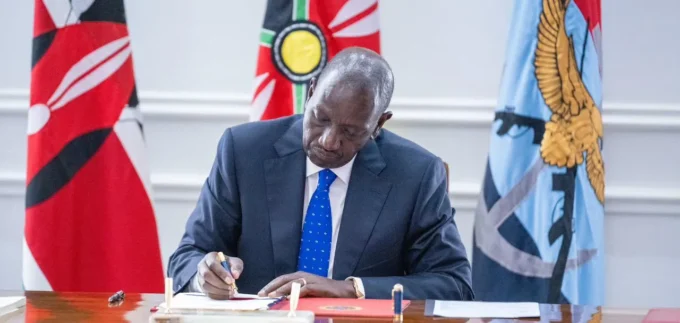
The enactment of this change came as President William Ruto signed a bill into law, effectively discarding the previous static debt ceiling of 10 trillion shillings ($67 billion) in favor of a more dynamic debt-to-GDP ratio mechanism. The law’s scope now extends to cover all loans and guarantees incurred by the nation, including those of its 47 county governments.
Kenya faced a critical turning point when it breached its former debt ceiling at the close of June, primarily due to an 18% year-on-year increase in liabilities. Consequently, the total debt soared to an unprecedented 10.19 trillion shillings. This surge propelled the debt-to-GDP ratio to an estimated 70% by October, up from 68% in the previous year, as per data from the International Monetary Fund. Subsequently, the IMF raised its assessment of Kenya’s overall debt distress risk to ‘high.’
By June, Kenya’s current debt’s present value stood at 62% of its GDP, as reported by the central bank. The new law seeks to rectify this by establishing a target to reduce the debt back to the 55% threshold by 2027, providing the government with a five-year window to execute this fiscal adjustment.
Notably, the legislation permits the government to exceed the 55% threshold, but only by up to five percentage points in times of extreme economic conditions, such as natural disasters or specific political events.
This alteration marks a substantial departure for Kenya, which, just four years ago, employed a fixed shilling amount as its upper debt limit. The shift to a debt-to-GDP ratio in 2014 signified a departure from the prior practice of employing an absolute debt ceiling. Consequently, Kenya reinforces its commitment to financial prudence and sound debt management with this latest transformation.
As Kenya embarks on this new financial trajectory, it will be interesting to observe how these modifications influence the nation’s fiscal stability, investment climate, and overall economic outlook.
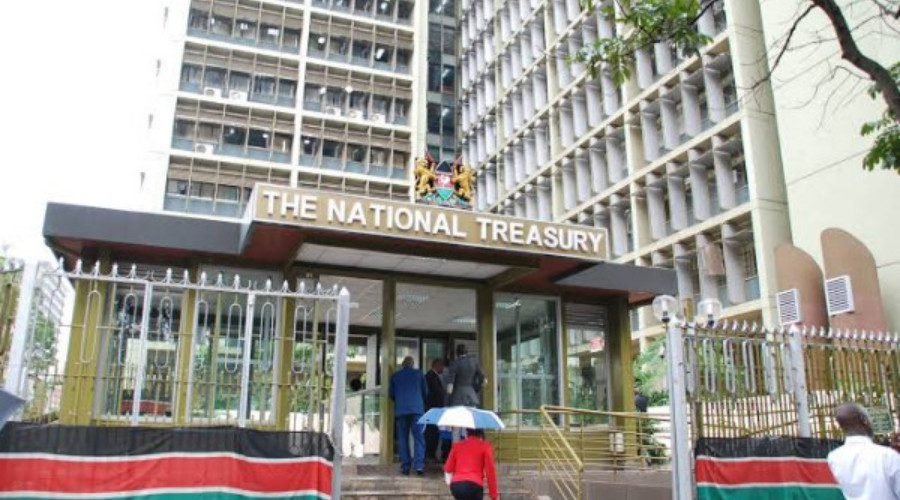
Photo (The National Treasury and Economic Planning)
By: Montel Kamau
Serrari Financial Analyst
17th October, 2023