
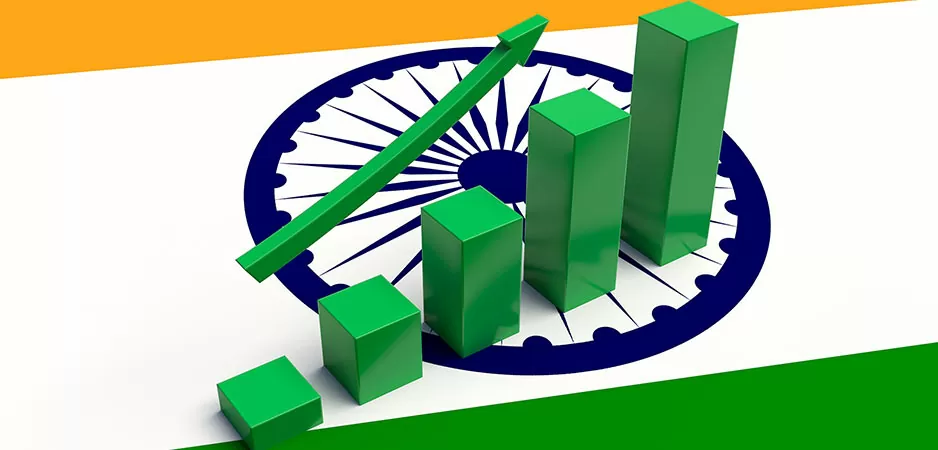
India is set to achieve a substantial 7.3% annual economic growth in the fiscal year ending March 2024, as projected by the National Statistical Office (NSO). This outlook, surpassing forecasts for major global economies, provides a significant political advantage for Prime Minister Narendra Modi in the lead-up to national elections.
The NSO, cautioning that these figures are preliminary, highlighted the potential influence of improved data coverage, actual tax receipts, and state subsidy expenditures on subsequent revisions.
This optimistic projection follows the Reserve Bank of India’s (RBI) recent adjustment, raising its forecast from 6.5% to 7%. If realized, this would mark the third consecutive year of growth exceeding 7%, positioning India favorably amidst global economic challenges.
Analysts attribute this success to the government’s adept economic management in the face of global uncertainties. Rahul Bajoria, economist at Barclays Investment Bank, commended India’s resilience, particularly in a challenging global economic context.
S&P Global Ratings expects India to maintain its status as the fastest-growing major economy, potentially propelling it to become the world’s third-largest economy by 2030.
In the fiscal year 2022/23, India’s economy grew by 7.2%, following an impressive 8.7% growth in 2021/22. As Finance Minister Nirmala Sitharaman prepares to present an interim annual budget on February 1, the focus is expected to be on increased infrastructure spending supported by rising tax receipts, with an aim to reduce the fiscal deficit from 5.9% of GDP in the current fiscal year.
Government spending is projected to rise by approximately 4% year-on-year in 2023/24, a substantial increase from the 0.1% recorded in the previous fiscal year. Simultaneously, private investment is expected to rise by 10.3%, slightly below the 11.4% increase in the previous year. Private consumption, constituting nearly 58% of GDP, is anticipated to expand by 4.4% year-on-year, down from 7.5% in the previous fiscal year.
Prime Minister Modi’s initiatives to attract global companies, such as Apple and Japanese corporations, to establish manufacturing facilities in India, coupled with increased spending on critical infrastructure projects like roads, ports, and airports, have been instrumental in driving economic growth.
The manufacturing sector, contributing about 17% to GDP, is projected to expand by 6.5% year-on-year in 2023/24, a significant increase from the 1.3% growth recorded a year ago. Concurrently, construction output is expected to grow by 10.7%, up from 10% in the previous year.
While acknowledging the economic growth, concerns have been raised about job creation in sectors like information technology and financial services, which have limited reach in rural areas. The growth in farm output, employing over 40% of the workforce and contributing about 15% to GDP, is expected to slow to 1.8% in the current fiscal year, down from 4% a year ago.
India’s per capita income, with a population exceeding 1.4 billion, remains at around $2,500, less than a quarter of China’s, underscoring the need for sustained efforts to uplift the standard of living for its citizens.
As India navigates its economic trajectory, these forecasts underscore the nation’s resilience and potential to emerge as a significant global economic force in the coming years.
Photo ( Fair Oberver)
By; Montel Kamau
Serrari Financial Analyst
9th January, 2024