
India has solidified its position as the world’s leading recipient of remittances, experiencing a remarkable 12.3% surge in 2023, with an influx of $125 billion. This substantial increase not only highlights the financial contributions of the Indian diaspora but also underscores their pivotal role in fortifying the nation’s economic foundations.
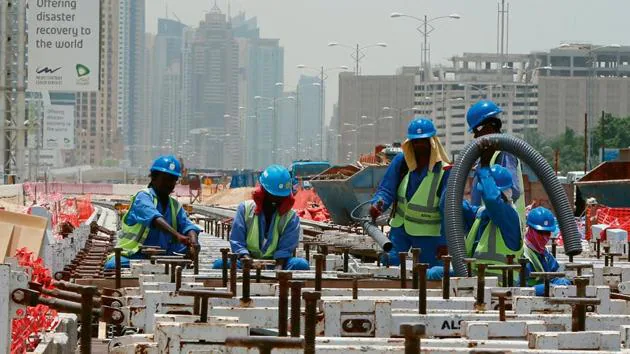
The United States remains the primary source country for remittances, while the significant contributions from Gulf Cooperation Council (GCC) nations, particularly the UAE and Saudi Arabia, emphasize the crucial role played by migrant workers in these regions.
The World Bank’s Migration and Development Brief for 2023 outlines the overall growth in remittance flows to low- and middle-income countries (LMICs), totaling $669 billion. This growth, albeit at a slightly slower pace of 3.8%, is attributed to the resilient labor markets in advanced economies and the GCC, providing support for migrants to fulfill their financial responsibilities.
India, leading South Asia, has surpassed earlier projections, reaching $125 billion in remittances for the year. This outstanding performance is credited to a robust economy, driven by a tight labor market in the U.S. and substantial employment growth in Europe.
Breaking down the top remittance recipient countries in 2023, Mexico with $67 billion, followed by China ($50 billion), the Philippines ($40 billion), and Egypt ($24 billion). India’s top position is indicative of the significant financial support from its diaspora, solidifying the country’s economic resilience.
Analysis from India’s Ministry of Finance for the fiscal year 2021-22 reveals key sources of remittances, with the U.S. contributing a significant 23.4%, followed by the UAE at 18%. Noteworthy contributors include the UK (6.8%), Saudi Arabia (5.1%), and collectively, Kuwait, Oman, and Qatar at 5.5%.
While remittances have outpaced foreign direct investment and official development assistance, the World Bank underscores the importance of inclusive labor markets and social protection policies to sustain these vital financial lifelines for developing countries.
Regionally, remittance inflows witnessed positive growth in Latin America and the Caribbean (8.0%), South Asia (7.2%), East Asia and the Pacific (3.0%), and Sub-Saharan Africa (1.9%). However, the Middle East and North Africa experienced a 5.3% decline, attributed to reduced flows to Egypt.
Highlighting persistently high costs, the World Bank’s Remittances Prices Worldwide Database indicates an average of 6.2% to send $200, with banks identified as the costliest channel at 12.1%.
Looking ahead, the World Bank projects a moderated growth of remittances to LMICs at 3.1% in 2024, considering factors such as weaker global economic activity, potential job market uncertainties, volatile oil prices, and currency exchange rate fluctuations. As migrants navigate challenges, including high inflation and subdued global growth, the importance of inclusive labor markets and social protection policies remains paramount in sustaining these vital financial flows.
By: Montel Kamau
Serrari Financial Analyst
19th December, 2023