
In a transaction that underscores Africa’s growing capacity to finance its own strategic acquisitions, Heirs Energies has acquired the entire 20.07 percent equity stake previously held by French oil company Maurel & Prom S.A. in Seplat Energy Plc for approximately $500 million. The landmark deal, announced on December 31, 2025, positions the Tony Elumelu-backed firm as the largest single shareholder in one of Nigeria’s most valuable independent energy companies, marking a pivotal moment in the country’s evolving oil and gas landscape.
The acquisition of 120.4 million ordinary shares at 305 pence per share represents more than a change in ownership—it signals a fundamental shift in Nigeria’s energy sector toward greater indigenous participation and control. Supported entirely by African financial institutions, the transaction demonstrates the continent’s increasing ability to mobilize capital for strategic investments without relying primarily on Western financing.
Build the future you deserve. Get started with our top-tier Online courses: ACCA, HESI A2, ATI TEAS 7, HESI EXIT, NCLEX-RN, NCLEX-PN, and Financial Literacy. Let Serrari Ed guide your path to success. Enroll today.
Strategic Significance and Market Response
The deal makes Heirs Energies Seplat’s most significant shareholder with 20.07 percent, overtaking global and institutional investors including Petrolin Group with 13.77 percent, Sustainable Capital with 9.7 percent, Professional Support with 8.5 percent, and Allan Gray Investment Management with 5.61 percent. This ownership stake provides Heirs Energies with substantial influence over one of Nigeria’s most strategically important energy producers at a time when the country is seeking to revitalize its oil and gas sector.
Market reaction to the announcement was immediate and positive. Seplat’s shares rose 11 percent in London, while Maurel & Prom shares gained 8 percent in Paris, reflecting investor confidence in the transaction’s strategic rationale and the financial backing supporting it. The premium paid by Heirs Energies—approximately 10.9 percent above Seplat’s prevailing market price at the time of announcement—underscores the perceived value of the acquisition.
For Heirs Energies, the acquisition represents a further milestone in the company’s long-term strategy to strengthen indigenous participation in strategic assets and accelerate sustainable energy development and security for Nigeria and Africa. The move aligns with broader trends in Nigeria’s oil sector, where international majors including Shell, ExxonMobil, and Chevron have been gradually reducing their onshore operations, creating opportunities for domestic companies to acquire mature assets and assume operational control.
Tony Elumelu’s Vision for African Energy Independence
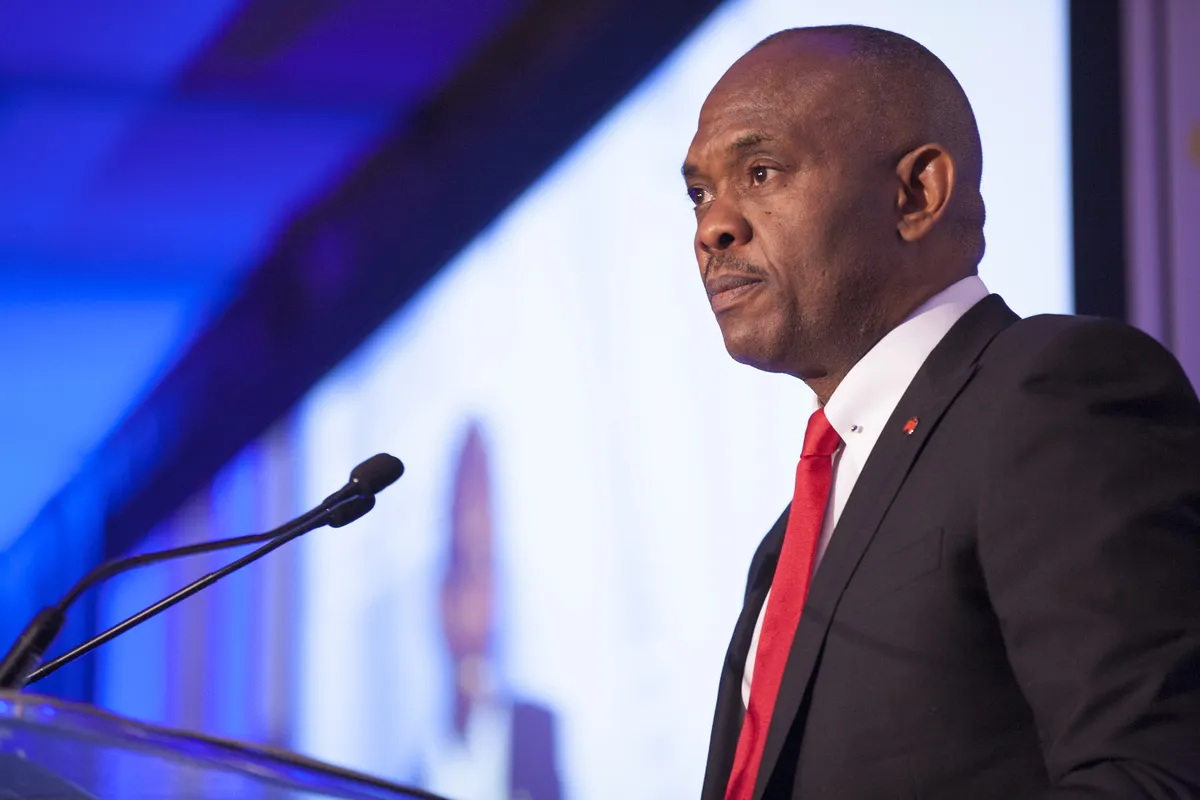
Commenting on the transaction, Tony Elumelu, Chairman of Heirs Energies and one of Africa’s most influential business leaders, articulated a vision that extends beyond conventional corporate acquisition. “This acquisition reflects our strong belief in Africa’s ability to own, develop, and responsibly manage its strategic resources,” Elumelu stated. “It is a long-term investment in Nigeria’s and Africa’s energy future, and aligns with our mission to drive energy security, industrialization, and shared prosperity.”
Elumelu’s emphasis on African ownership and management of strategic resources reflects his broader philosophy of “Africapitalism”—the belief that the private sector must lead Africa’s transformation by investing long-term in sectors that generate both economic prosperity and social wealth. Through Heirs Holdings, his family-owned investment company, Elumelu has built a diversified portfolio spanning power, financial services, hospitality, real estate, healthcare, and technology across 24 countries.
The billionaire businessman and philanthropist, who chairs the United Bank for Africa and Transcorp Group, has increasingly focused capital on energy infrastructure in recent years. His commitment to the sector goes beyond financial returns—it represents a strategic bet on Africa’s ability to solve its own energy challenges through indigenous capital, expertise, and long-term vision.
African Financing for African Assets
The transaction structure highlights a significant development in African capital markets: the ability of continental financial institutions to underwrite major strategic acquisitions. The deal was supported by two leading African financial institutions—Afreximbank and Africa Finance Corporation (AFC)—further demonstrating Africa’s capacity to finance its own deals without primary reliance on Western capital markets.
The financing follows closely on the heels of another major transaction: Heirs Energies secured a $750 million facility from Afreximbank just weeks earlier on December 20, 2025. That five-year facility, one of the largest funding deals secured by a locally owned energy producer on the continent, supports field development, production optimization, and refinancing of existing debt while providing new capital for expansion.
George Elombi, president and chairman of Afreximbank, emphasized the strategic importance of African financial institutions supporting continental energy development. “If Africa’s energy sector is not supported, many countries will struggle,” Elombi noted at the signing ceremony in Abuja, adding that the bank’s African ownership underpins its commitment to remain a steady partner through both favorable and difficult cycles.
The payment structure for the Seplat acquisition demonstrates sophisticated financial engineering: Heirs Energies made an initial payment of $248 million, with the balance payable within 30 days and secured by an irrevocable letter of credit. The agreement also includes a potential $10 million in contingent consideration, depending on Seplat’s share price performance over the next six months, aligning the interests of buyer and seller while providing downside protection for Maurel & Prom.
Seplat Energy: A Transformational Platform
The target of Heirs Energies’ acquisition is itself a Nigerian success story. Seplat Energy Plc has evolved from its founding in 2009 into Nigeria’s leading independent energy company, listed on both the Nigerian Exchange and the London Stock Exchange. The company has systematically built a diversified oil and gas portfolio across the prolific Niger Delta, close to export terminals and major demand centers.
Seplat’s transformation accelerated dramatically in 2024 with the acquisition of Mobil Producing Nigeria Unlimited, subsequently renamed Seplat Energy Producing Nigeria Unlimited (SEPNU). This landmark transaction, which received ministerial consent and closed in late 2024, more than doubled Seplat’s production and significantly expanded its reserves base and operational footprint.
As of December 31, 2024, Seplat reported 2P reserves of 1.043 billion barrels of oil equivalent and working interest production of 135,600 barrels of oil equivalent per day as of October 31, 2025. The company’s total 2P+2C reserves increased by 125 percent to 1,217 million barrels of oil equivalent following the SEPNU acquisition, reinforcing its position as a leading player in Nigeria’s energy sector.
The SEPNU acquisition brought significant strategic assets under Seplat’s control. Along with the oil and gas producing assets, Seplat gained operating control of dedicated shallow water infrastructure and three export terminals: the Qua Iboe Terminal, Bonny River Terminal, and the Yoho Floating Storage and Offloading (FSO) facility, as well as Natural Gas Liquids (NGL) plants at East Area Project (EAP) and Oso.
From being a 100 percent onshore operator, approximately 70 percent of Seplat’s production is now offshore and exported through three terminals that the company operates. This transformation has improved security and revenue assurance while diversifying the company’s export infrastructure in the Niger Delta, where pipeline sabotage and theft have historically plagued onshore operations.
Seplat’s financial performance in 2024 reflected this expanded scale. The company reported revenue of $1.116 billion, a 5 percent increase from 2023, with adjusted EBITDA of $539 million, up 20.3 percent. Operating profit reached $437.9 million, representing a 75.6 percent increase year-over-year. Chairman Udoma Udo Udoma stated that the company’s 2024 performance “met and even surpassed the board’s expectations.”
Heirs Energies: Building an Indigenous Energy Champion
The acquirer in this transaction, Heirs Energies, has rapidly established itself as one of Africa’s leading indigenous integrated energy companies since beginning operations in 2021. The company’s foundation was the acquisition of Oil Mining Lease (OML) 17 from Shell, TotalEnergies, and Eni, marking one of Nigeria’s most significant indigenous oil and gas transactions.
OML 17, located in the Niger Delta, has proven to be a highly productive asset. Heirs Energies operates the lease, producing over 50,000 barrels of oil per day and 120 million cubic feet of gas daily, with a reserves base exceeding 1.5 billion barrels of oil and 2.5 trillion cubic feet of gas. The company has demonstrated operational excellence, achieving significant production milestones through innovative well intervention techniques and disciplined reservoir management.
In November 2025, Heirs Energies achieved a major operational breakthrough when the joint venture with Nigerian National Petroleum Company doubled natural gas output from OML 17 following a rigless well intervention—the first of its kind in Nigeria. The petroleum block now produces approximately 135 million standard cubic feet of gas per day, feeding power plants across Nigeria’s eastern region and easing chronic supply shortages.
This gas production directly supports over 400 megawatts of electricity generation, powering millions of homes, businesses, and factories across Nigeria. The additional gas has transformed electricity generation at Transcorp’s TransAfam Power, another company chaired by Elumelu, where gas supply constraints had previously limited output. Osa Igiehon, CEO of Heirs Energies, emphasized that “responsible, innovative operations in brownfield assets are essential for Nigeria’s energy security.”
The Seplat acquisition significantly expands Heirs Energies’ production profile. By securing a one-fifth interest in Seplat, Heirs now claims a proportional share of Seplat’s output, adding approximately 27,000 to 28,000 barrels of oil equivalent per day to its portfolio when combined with existing OML 17 production. This brings Heirs Energies’ total consolidated equity oil production to roughly 50,000 barrels per day, positioning it among Nigeria’s top indigenous upstream players.
Maurel & Prom’s Strategic Exit
For the seller, Maurel & Prom, the transaction represents the culmination of a 15-year investment journey. The Paris-based firm was one of Seplat’s three founding shareholders and the largest single investor since the company was established in 2010. Over that period, the French firm played a central role in Seplat’s evolution into a major independent producer with a diversified oil and gas portfolio.
Olivier de Langavant, CEO of Maurel & Prom, described the timing as opportune for monetizing the position. “We are incredibly proud to have supported Seplat’s journey over the last fifteen years,” de Langavant stated, characterizing the investment as having delivered “very strong returns” since inception. He indicated that the sale would allow Maurel & Prom to redeploy capital into direct oil and gas asset investments as part of an accelerated growth strategy.
The transaction marks a clear transition in Seplat’s shareholder base, with a foreign founding investor handing over to a Nigerian-led, Africa-focused energy group as a long-term strategic shareholder. Legal and financial advisers to the deal were Herbert Smith Freehills, Kramer, and Morgan Stanley, reflecting the transaction’s complexity and strategic importance.
One decision can change your entire career. Take that step with our Online courses in ACCA, HESI A2, ATI TEAS 7, HESI EXIT, NCLEX-RN, NCLEX-PN, and Financial Literacy. Join Serrari Ed and start building your brighter future today.
Implications for Nigeria’s Energy Sector
The Heirs Energies acquisition of the Seplat stake carries broader implications for Nigeria’s oil and gas industry, which has been undergoing significant transformation in recent years. The country, Africa’s largest oil producer, has battled declining foreign investment, regulatory uncertainty, and pipeline insecurity even as the government pushes for local ownership and infrastructure renewal.
International oil companies have been steadily divesting their onshore Nigerian assets, creating a vacuum that indigenous companies are increasingly filling. Shell, ExxonMobil, Chevron, and other majors have reduced their onshore operations, making room for domestic investors to assume operational and equity control. This trend reflects both the operational challenges of onshore production in the Niger Delta and the strategic pivot by international majors toward deepwater assets that offer higher returns with less security risk.
For indigenous firms like Seplat and Heirs Energies, this represents a unique opportunity to scale operations and assume stewardship of Nigeria’s hydrocarbon resources. However, success requires navigating substantial operational risks including pipeline security, community relations, regulatory compliance, and technical challenges associated with aging infrastructure.
The Nigerian National Petroleum Company Limited announced that total crude oil and condensate production reached 1.6 million barrels per day in November 2025, marking a critical turning point after years of production declines. This recovery has been driven partly by enhanced security measures and partly by the growing role of indigenous producers who often have better community relationships and more sustainable operating models than departing international majors.
Industry analysts view the Heirs-Seplat deal as a vote of confidence in Nigeria’s energy sector despite global pressure to transition away from fossil fuels. The transaction demonstrates that African investors and financial institutions are willing to make long-term commitments to hydrocarbon development, viewing oil and gas as essential to Africa’s energy security and economic development for decades to come.
Gas: The Strategic Priority
While oil production remains important, both Heirs Energies and Seplat have positioned gas development as a strategic priority, aligning with Nigeria’s energy transition goals and the country’s desperate need for reliable power generation. Nigeria possesses vast natural gas reserves—the largest in Latin America and among the largest globally—yet has struggled to monetize these resources effectively.
Seplat has made substantial investments in gas infrastructure, operating three gas processing plants at Oben (465 MMscfd capacity), Sapele (85 MMscf/d), and ANOH (300 MMscf/d), providing total processing capacity of 850 MMscf/d. These facilities enable the processing of associated gas, thereby reducing flaring in the Niger Delta—a major environmental and economic concern.
In 2024, Seplat commissioned the Sapele Integrated Gas Plant in Q4, with commercial gas sales commencing in early 2025. The ANOH gas plant is on track to test with third-party dry gas in H1 2025, representing another major milestone in Nigeria’s gas commercialization efforts. These projects position Seplat to significantly increase its gas sales to the domestic market, where demand far exceeds supply.
Roger Brown, CEO of Seplat Energy, has emphasized the transformative potential of gas for Nigeria. “Gas is really the big story for Nigeria, for the future,” Brown stated in an interview. “It really means a transformation of energy security, energy affordability.” With Heirs Energies now as its largest shareholder—a company that already supplies gas for over 400 megawatts of electricity generation—Seplat’s gas development strategy gains additional strategic alignment and operational synergies.
The combination of Seplat’s gas processing infrastructure and Heirs Energies’ demonstrated ability to deliver gas to power plants creates opportunities for integrated value chains that could materially improve Nigeria’s electricity supply. The country has long suffered from chronic power shortages despite abundant gas reserves, largely due to infrastructure gaps and coordination failures between gas producers and power generators.
Financial Strategy and Future Growth
The financial architecture supporting the Heirs-Seplat transaction reflects sophisticated capital management and strategic planning. The $750 million Afreximbank facility secured in December 2025 provides Heirs Energies with substantial financial capacity to pursue strategic acquisitions while maintaining operational investments in existing assets.
Critically, the transaction leverages Seplat’s improved cash flows and dividend potential as major new gas plants come online. Financial projections suggest that Seplat could increase its dividend payout ratio substantially in the coming years, providing Heirs Energies with yield returns that can service and retire acquisition debt. These increased dividends, alongside direct operational revenues from OML 17, form the financial mechanism to support the acquisition financing.
Seplat’s board approved and recommended a core dividend of 3.6 cents per share for the final quarter of 2024, bringing the total core dividend declared for 2024 to 13.2 cents per share—a 10 percent increase on 2023. With Heirs Energies now holding 20.07 percent of shares, this dividend stream represents substantial cash returns on the investment.
Looking forward, Seplat has outlined ambitious growth plans targeting production of 200,000 barrels per day by 2030, supported by planned investments of up to $3 billion to drill at least 120 new wells and commission three gas projects. The company expects its cumulative cash flow to jump to $6 billion by 2030, representing 2.5 times what it generated between 2020 and 2024.
These expansion plans will benefit from Heirs Energies’ presence as the largest shareholder, bringing not just capital but also operational expertise and strategic alignment. Both companies share a commitment to indigenous energy development, responsible operations, and contributing to Nigeria’s energy security—values that should facilitate productive shareholder engagement and strategic decision-making.
Regulatory and Political Context
The transaction occurs against a backdrop of significant regulatory evolution in Nigeria’s oil and gas sector. Seplat completed the conversion of its operated onshore assets to Nigeria’s Petroleum Industry Act (PIA) fiscal regime in late 2025, replacing the old Petroleum Profit Tax regime. The transition covers key Oil Mining Leases that contributed significant production in 2025, with new leases and prospecting licenses issued and operations under the PIA beginning January 1, 2026.
Management views this PIA conversion as a catalyst for improved operational efficiency, profitability, and investment attractiveness. The reformed fiscal framework aims to provide greater certainty for investors while ensuring appropriate government revenue capture—a balance that has historically been challenging to achieve in Nigeria’s oil sector.
The acquisition will require regulatory approvals from Nigerian authorities, including the Securities and Exchange Commission and other relevant bodies. However, given the government’s stated policy of encouraging indigenous participation in the oil and gas sector, such approvals are widely expected to be forthcoming.
President Bola Tinubu’s administration has emphasized boosting oil production, improving security in oil-producing regions, and creating a more attractive investment climate for both domestic and international energy companies. The administration has taken steps to boost security and reduce pipeline sabotage, which has contributed to the recent recovery in Nigeria’s oil output.
Operational Integration and Synergies
While Heirs Energies’ stake in Seplat represents a financial investment rather than operational control, the 20.07 percent shareholding provides significant influence and creates potential synergies between the two companies. Both firms operate in Nigeria’s Niger Delta, both prioritize gas development for domestic power generation, and both share a commitment to indigenous energy development.
Operational synergies could emerge in several areas. Technical expertise and best practices can be shared between the companies’ respective operations at OML 17 and Seplat’s diverse asset portfolio. Infrastructure coordination, particularly around gas processing and delivery to power plants, could optimize utilization and reduce redundancies. Procurement and supply chain management might benefit from increased scale and coordinated purchasing.
Perhaps most importantly, the alignment creates a more powerful voice for indigenous energy companies in policy discussions and industry forums. Combined, Heirs Energies and Seplat represent one of the most significant concentrations of Nigerian-owned oil and gas production and reserves, providing a strong platform to advocate for policies that support local content development, energy security, and sustainable resource management.
Challenges and Risks
Despite the strategic logic and financial backing supporting the transaction, both companies face substantial challenges in Nigeria’s complex operating environment. Security remains a persistent concern in the Niger Delta, where pipeline vandalism, crude oil theft, and community conflicts can disrupt operations and reduce production. While most Nigerian producers have seen improvements following enhanced security measures, the risk remains significant.
Infrastructure constraints pose another challenge. Nigeria’s oil and gas infrastructure is aging, with many pipelines and processing facilities requiring substantial investment for maintenance and upgrades. The capital intensity of these investments, combined with the need to maintain current operations, creates ongoing financial pressure.
Market conditions also present headwinds. Global oil prices remain under pressure from oversupply concerns, with the International Energy Agency warning of a potential “record surplus” in 2026 driven by record output from the United States, Brazil, and Guyana. Nigeria’s incremental production contributes to this glut, making it more difficult for OPEC+ to maintain price floors.
Regulatory uncertainty, though reduced by PIA implementation, remains a factor. Changes in fiscal terms, environmental regulations, or local content requirements could materially affect project economics. The transaction’s success ultimately depends on both companies’ ability to navigate these challenges while executing on growth plans and maintaining operational excellence.
The Broader Africapitalism Vision
The Heirs-Seplat transaction exemplifies Tony Elumelu’s philosophy of Africapitalism in action—demonstrating that African capital, African institutions, and African companies can successfully undertake transformational investments in the continent’s strategic sectors. This philosophy extends well beyond energy to encompass Elumelu’s broader portfolio of investments and philanthropic initiatives.
Through the Tony Elumelu Foundation, established in 2010, Elumelu committed $100 million to create 10,000 entrepreneurs across Africa over ten years. The Foundation’s entrepreneurship program has since identified and funded over 24,000 young African entrepreneurs and created a digital ecosystem of over 2.5 million Africans, providing training, funding, and mentorship to catalyze job creation and economic development.
Elumelu’s vision is that Africa’s development must be driven primarily by Africans themselves—through long-term investments that create both economic prosperity and social wealth. The Heirs-Seplat transaction embodies this principle: African capital (from Afreximbank and AFC), an African investor (Heirs Energies), acquiring a stake in an African company (Seplat), with the explicit goal of strengthening energy security and industrialization across the continent.
In a keynote address at the 2025 Abuja Investment Summit, Elumelu emphasized that “Africa’s development is our responsibility”. “No one else will do it for us. Africa’s future is in our hands,” he declared, calling for aggressive investment in energy solutions ranging from renewables to cleaner gas-based infrastructure.
This philosophy resonates particularly strongly in Nigeria’s energy sector, where decades of dependence on international oil companies left the country vulnerable to external decisions and priorities. The shift toward indigenous ownership, demonstrated by transactions like Heirs’ acquisition of the Seplat stake, represents a strategic reorientation toward African control of African resources—with the objective of ensuring that development benefits accrue primarily to African stakeholders.
Looking Forward
The transaction is expected to close following regulatory approvals, which are anticipated in early 2026. Once completed, the deal will formally establish Heirs Energies as Seplat’s largest shareholder and create one of the most significant concentrations of indigenous-owned oil and gas assets in sub-Saharan Africa.
For Heirs Energies, the acquisition represents both validation of its rapid growth since 2021 and a platform for continued expansion. The company’s demonstrated operational success at OML 17, combined with substantial financial backing from Afreximbank and the strategic stake in Seplat, positions it as a long-term player in Nigeria’s energy sector with the scale and resources to pursue additional opportunities.
For Seplat, gaining Heirs Energies as its largest shareholder brings strategic alignment with another indigenous producer that shares its commitment to Nigeria’s energy development. The relationship could facilitate operational synergies, provide additional strategic options, and strengthen Seplat’s position as Nigeria’s leading independent energy company as it executes ambitious growth plans.
For Nigeria and Africa more broadly, the transaction signals a maturing of indigenous energy capabilities and financial capacity. The ability of African institutions to provide $750 million in financing, combined with a Nigerian company successfully acquiring a $500 million stake in a strategic energy asset, demonstrates that the continent can mobilize substantial capital for its own development priorities.
As global energy markets evolve and international oil companies reassess their portfolios, transactions like the Heirs-Seplat deal may become increasingly common—with indigenous African companies assuming greater ownership and operational control of the continent’s hydrocarbon resources. Whether this trend leads to improved outcomes for African economies and populations will depend on how successfully these indigenous companies can balance commercial objectives with developmental responsibilities.
What is clear, however, is that Africa’s energy future will increasingly be shaped by Africans—through companies like Heirs Energies and Seplat, backed by institutions like Afreximbank and AFC, pursuing a vision of energy security, industrialization, and shared prosperity that places African interests at the center of strategic decision-making.
Ready to take your career to the next level? Join our Online courses: ACCA, HESI A2, ATI TEAS 7 , HESI EXIT , NCLEX – RN and NCLEX – PN, Financial Literacy!🌟 Dive into a world of opportunities and empower yourself for success. Explore more at Serrari Ed and start your exciting journey today! ✨
Track GDP, Inflation and Central Bank rates for top African markets with Serrari’s comparator tool.
See today’s Treasury bonds and Money market funds movement across financial service providers in Kenya, using Serrari’s comparator tools.
photo source: Google
By: Montel Kamau
Serrari Financial Analyst
5th January, 2026