

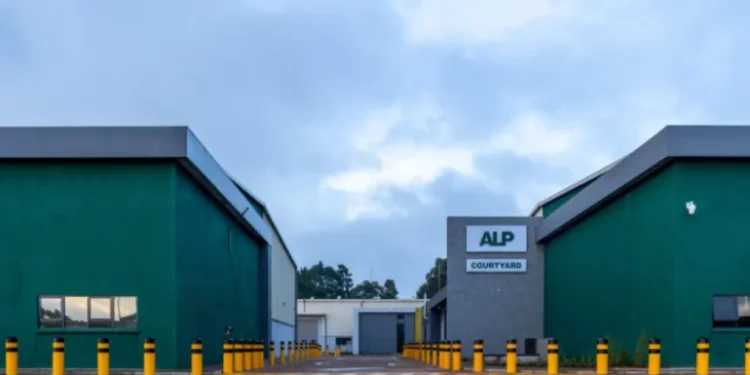
Kenya’s listed property market is entering a new phase of sector diversification following the successful fundraising of $29.55 million (KSh 3.82 billion) by ALP Industrial REIT, a logistics-focused real estate investment trust sponsored by Africa Logistics Properties (ALP). The capital was raised through a restricted offer that achieved 98.5% subscription, demonstrating strong investor appetite for industrial and logistics property assets.
The REIT is set to list 39.95 million units on the Nairobi Securities Exchange (NSE) on 11 March 2026, marking a significant milestone in the development of Kenya’s capital markets and real estate investment landscape. The new investment vehicle is backed by logistics warehouse parks located in Tatu City and Tilisi in Limuru, two rapidly growing commercial and industrial hubs within the Nairobi metropolitan region.
The successful fundraising represents an important step in expanding Kenya’s real estate investment trust market, which has historically been dominated by retail and commercial office developments. By focusing on logistics infrastructure, ALP Industrial REIT introduces a new asset class into the country’s listed property sector.
Details of the Fundraising
The restricted offer attracted strong interest from investors, resulting in applications for 29.55 million units priced at $1 per unit. All investors who submitted applications received full allocations, reflecting a balanced demand structure during the fundraising process.
Although the offer fell slightly short of its initial $30 million (KSh 3.88 billion) target, the final subscription rate of 98.5% still reflects substantial investor confidence in the logistics property segment.
As part of the transaction structure:
- 39.95 million units will be listed for trading on the NSE.
- Units will be credited to investors’ Central Depository System (CDS) accounts on 10 March 2026.
- Public trading is scheduled to begin on 11 March 2026.
The listing will expand the number of real estate investment options available to investors in Kenya’s capital markets.
Seed Assets and Portfolio Composition
The newly created REIT will initially hold three logistics warehouse assets contributed by Africa Logistics Properties Holdings.
These seed assets form the foundation of the REIT’s investment portfolio and are located within two major logistics parks:
ALP North – Tatu City
Located within the Tatu City Special Economic Zone, ALP North is a logistics and industrial park designed to support modern supply chain operations.
Tatu City has become one of Kenya’s most prominent mixed-use developments, attracting investment from manufacturers, logistics providers, and technology companies.
ALP West – Tilisi, Limuru
The second logistics park is situated within Tilisi, a rapidly growing commercial hub along the Nairobi–Nakuru highway.
Tilisi has developed into an important location for warehousing and distribution due to its proximity to Nairobi and major transportation routes.
These logistics parks host Grade A warehouse facilities used by:
- Manufacturers
- Retail distributors
- E-commerce logistics operators
- Regional supply chain companies
The strategic locations of these facilities allow companies to efficiently distribute goods across Kenya and neighboring countries.
Sponsor Participation in the REIT
As part of the asset transfer into the REIT structure, Africa Logistics Properties Holdings contributed its three logistics warehouse properties as seed assets.
In exchange, the sponsor received 10.4 million units in the REIT, aligning its long-term interests with those of other investors.
This structure is common in REIT transactions, where the sponsor contributes real estate assets into the fund while retaining a meaningful ownership stake.
Maintaining sponsor participation helps ensure that the developer remains committed to the long-term success and performance of the investment vehicle.
Additional Investment from InfraCo Africa
The transaction also attracted support from InfraCo Africa, an infrastructure investor operating under the Private Infrastructure Development Group (PIDG).
InfraCo Africa committed an additional $5 million (KSh 646 million) toward a pipeline logistics asset linked to the REIT’s future expansion.
This additional investment increased the total participation associated with the transaction to approximately 115.17% of the original offer size.
The involvement of InfraCo Africa is significant because the organization is backed by several international development partners, including:
- United Kingdom
- Netherlands
- Switzerland
- Canada
- Sweden
- Australia
Such participation signals strong institutional confidence in Kenya’s logistics and industrial property sector.
Historical Context: The Development of Kenya’s REIT Market
Real Estate Investment Trusts (REITs) were introduced in Kenya as part of efforts to deepen capital markets and expand real estate investment opportunities.
REITs allow investors to gain exposure to income-generating property assets without directly owning real estate.
In Kenya, the REIT market has developed slowly compared to other global markets due to several factors:
- Regulatory complexity
- Limited investor awareness
- Relatively small institutional investor participation
- Liquidity concerns in listed property vehicles
However, existing REIT structures such as income REITs (I-REITs) and development REITs (D-REITs) have gradually gained traction in the market.
The introduction of a logistics-focused REIT marks a new stage in the evolution of Kenya’s property investment ecosystem.
The Growing Importance of Logistics Real Estate
The rise of logistics real estate has been driven by several structural changes in global commerce.
Growth of E-Commerce
The expansion of online retail has increased demand for modern warehousing and distribution centers.
Companies require strategically located logistics hubs to ensure fast delivery times and efficient inventory management.
Supply Chain Modernization
Businesses are increasingly investing in advanced logistics infrastructure to improve supply chain efficiency.
Modern warehouse facilities often include automated systems, temperature-controlled storage, and integrated transport connectivity.
Urban Expansion
Rapid urbanization in cities such as Nairobi has increased demand for industrial and logistics facilities located near major transportation corridors.
Regional Trade Growth
Kenya serves as a key gateway for trade within the East African Community (EAC).
Logistics facilities in Nairobi and surrounding areas play a vital role in distributing goods across the region.
Why This Development Matters
The listing of ALP Industrial REIT represents a significant development for both Kenya’s real estate sector and its capital markets.
Expansion of the Listed Property Market
Kenya’s listed property market remains relatively small compared with global markets.
The introduction of a logistics-focused REIT adds diversification to the types of property assets available to investors.
Increased Access to Institutional-Grade Real Estate
Through the REIT structure, investors can gain exposure to large-scale logistics infrastructure without directly purchasing or managing physical property.
This makes real estate investment more accessible to a wider range of investors.
Strengthening the Logistics Sector
Investment in modern warehouse infrastructure supports the growth of supply chains, manufacturing, and trade across the region.
Efficient logistics systems are essential for economic development and regional integration.
Development of Capital Markets
New listings on the Nairobi Securities Exchange help deepen Kenya’s capital markets by increasing liquidity and expanding investment opportunities.
Support for Economic Growth
Logistics infrastructure supports industries such as manufacturing, retail, and agriculture by improving distribution efficiency.
Risks and Considerations
Despite the positive outlook for logistics real estate, investors should also consider several potential risks.
Real Estate Market Cycles
Property markets can experience cyclical fluctuations depending on economic conditions.
A slowdown in economic growth could affect demand for warehouse and industrial space.
Interest Rate Sensitivity
REITs are often sensitive to interest rate changes.
Higher interest rates can increase borrowing costs and reduce the attractiveness of income-generating assets relative to fixed-income investments.
Market Liquidity
Kenya’s REIT market remains relatively small, which can sometimes limit trading liquidity for listed property units.
Lower liquidity can lead to greater price volatility.
Tenant Concentration Risks
Logistics facilities often depend on a limited number of large tenants.
If key tenants relocate or reduce operations, rental income could be affected.
Construction and Development Risks
Future expansion of logistics parks may involve development projects that carry construction delays, cost overruns, or regulatory challenges.
Looking Ahead
The successful fundraising and upcoming listing of ALP Industrial REIT may signal the beginning of broader growth in Kenya’s logistics real estate sector.
Several trends are likely to shape the future of the market.
Rising Demand for Logistics Infrastructure
As e-commerce, manufacturing, and regional trade continue to expand, demand for modern warehouse facilities is expected to increase.
Expansion of Industrial Parks
Developments such as Tatu City and Tilisi are likely to attract additional logistics investments in the coming years.
Growth of Institutional Real Estate Investment
Institutional investors, including pension funds and development finance institutions, are increasingly interested in income-generating infrastructure assets.
Additional REIT Listings
If the ALP Industrial REIT performs successfully, it could encourage other developers to launch similar investment vehicles.
Regional Supply Chain Integration
Kenya’s role as a logistics hub for East Africa may strengthen as infrastructure projects and trade agreements enhance regional connectivity.
Conclusion
The successful fundraising of $29.55 million by ALP Industrial REIT represents a major milestone for Kenya’s capital markets and property sector. By introducing logistics-focused real estate into the Nairobi Securities Exchange, the REIT expands investment opportunities while supporting the development of modern supply chain infrastructure.
Backed by high-quality logistics parks in Tatu City and Tilisi, and supported by international investors such as InfraCo Africa, the REIT is well positioned to capitalize on the growing demand for industrial and logistics facilities across the region.
Although challenges remain in Kenya’s relatively young REIT market, the listing signals increasing maturity in the country’s financial ecosystem and highlights the rising importance of logistics infrastructure in supporting economic growth and regional trade.
Track GDP, Inflation and Central Bank rates for top African markets with Serrari’s comparator tool.
See today’s Treasury bonds and Money market funds movement across financial service providers in Kenya, using Serrari’s comparator tools.
Photo Source: Google
By: Elsie Njenga
10th March,2026