
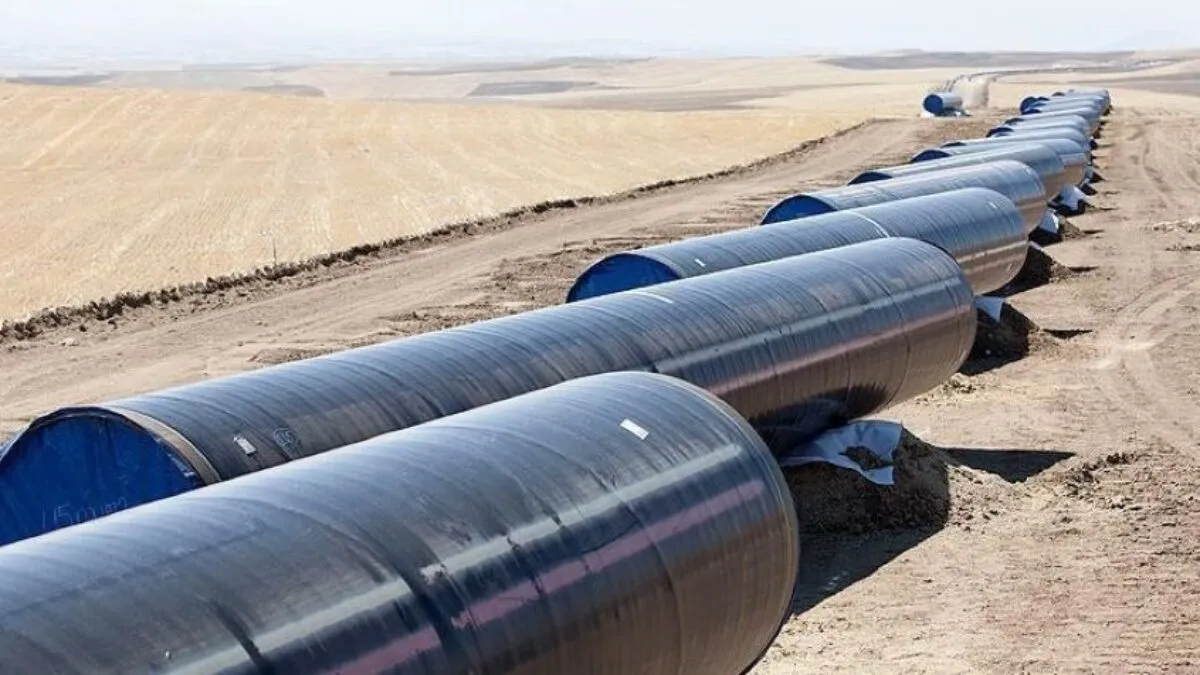
After years of delays, financial obstacles, and environmental contention, Uganda’s transformative ambition to become a regional oil exporter has taken a decisive step forward with the East African Crude Oil Pipeline (EACOP) reaching seventy-five percent completion. The milestone, announced by Uganda’s Petroleum Authority on Wednesday, marks significant progress in one of Africa’s most ambitious and controversial energy infrastructure projects, positioning the landlocked East African nation to finally monetize oil reserves discovered nearly two decades ago.
The five billion dollar pipeline project spans one thousand four hundred forty-three kilometers from Uganda’s Albertine Graben to Tanzania’s Tanga port on the Indian Ocean, representing a critical piece of infrastructure that will enable Uganda to export its waxy, low-sulfur crude to international markets. Once completed, EACOP will become the world’s longest electrically heated crude oil pipeline, a distinction necessitated by the unique physical characteristics of Ugandan crude, which requires heating to fifty degrees Celsius to maintain flowability during transportation.
Build the future you deserve. Get started with our top-tier Online courses: ACCA, HESI A2, ATI TEAS 7, HESI EXIT, NCLEX-RN, NCLEX-PN, and Financial Literacy. Let Serrari Ed guide your path to success. Enroll today.
Two-Decade Journey from Discovery to Development
Uganda’s path to first oil began in two thousand six with the discovery of commercial reserves in the Albertine Rift Basin, a geological formation straddling Uganda’s western border with the Democratic Republic of Congo. The Albertine Graben, as this oil-rich region is known, holds approximately six point five billion barrels of oil, of which one point four billion barrels are recoverable, according to Uganda’s Petroleum Authority. These substantial reserves place Uganda among the top oil-rich nations in Sub-Saharan Africa and have attracted major international energy companies.
However, the journey from discovery to development has been considerably longer and more complex than initially anticipated. While comparable projects in other African nations moved from discovery to production in relatively short timeframes—Ghana’s Jubilee Field, for instance, achieved first oil just three years after discovery—Uganda’s oil development has stretched across nearly twenty years, delayed by disagreements over infrastructure priorities, prolonged negotiations with international partners, contentious land acquisition processes, difficulties securing financing, and shifting geopolitical pressures.
Ernest Rubondo, chief executive of the Uganda Petroleum Authority, emphasized the project’s transformative potential during the announcement. “EACOP will be the backbone of Uganda’s crude oil exports and a key driver for economic transformation,” Rubondo stated, confirming that all pipes needed for the project have already been delivered to stations along the route and that three point three billion dollars has been invested to date.
Infrastructure Design and Technical Specifications
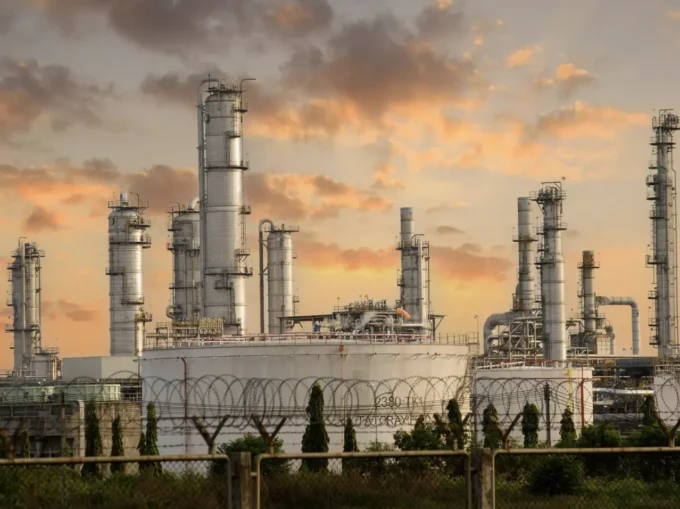
The EACOP project consists of a buried twenty-four-inch diameter pipeline stretching two hundred ninety-six kilometers through Uganda and one thousand one hundred forty-seven kilometers through Tanzania, designed to transport two hundred forty-six thousand barrels of oil per day at peak capacity. The pipeline infrastructure includes six pumping stations, two pressure reduction stations, and a marine export terminal in Tanzania’s Tanga port, creating an integrated system capable of moving Uganda’s crude to international markets efficiently.
The pipeline’s unique heated design addresses the specific challenges posed by Uganda’s waxy crude, which solidifies at ambient temperatures. The heat tracing system maintains the crude at the necessary fifty degrees Celsius throughout the pipeline’s length, preventing blockages and ensuring continuous flow. Pumping stations along the route, powered by solar plants in Tanzania, provide the energy necessary to maintain both temperature and pressure throughout the system.
The route was deliberately designed to minimize environmental impact, generally crossing farming areas and avoiding ecologically sensitive zones where possible. The pipeline will be completely buried, with topsoil and vegetation reinstated along its entire length, allowing people and animals to cross freely anywhere along the route once construction is complete.
Upstream Development: Tilenga and Kingfisher Projects
The EACOP pipeline serves as the critical midstream infrastructure connecting Uganda’s two major upstream oil development projects to international markets. The Tilenga project, operated by France’s TotalEnergies, and the Kingfisher project, operated by China’s CNOOC, together represent approximately fifteen billion dollars in upstream investment and form the foundation of Uganda’s oil production capacity.
Located in Buliisa and Nwoya districts around Lake Albert, the Tilenga project includes six oil fields and plans for approximately four hundred twenty-six wells drilled from thirty-one locations. Production will be delivered through buried pipelines to a central processing facility in Kasenyi, with capacity to process one hundred ninety thousand barrels per day. The facility will separate and treat fluids—oil, water, and gas—with all produced water reinjected into the fields and gas used to generate energy for the treatment process. Surplus electricity will be exported to both the pipeline system and Uganda’s national grid.
The Kingfisher project, situated in Kikuube District near Lake Albert’s shores, encompasses four oil fields and includes a central processing facility designed to handle forty thousand barrels per day. The Kingfisher field, approximately fifteen kilometers long and three kilometers wide, lies roughly two kilometers below Lake Albert and is estimated to contain five hundred sixty million barrels of crude oil in place, with one hundred ninety million barrels expected to be produced over a twenty to twenty-five year period.
Rubondo noted that drilling and associated field development are advancing steadily, with works at Tilenga now sixty percent complete and Kingfisher seventy-four percent complete. These projects are part of a broader four billion dollar investment wave aimed at preparing the sector for full production between twenty twenty-five and twenty twenty-seven, with first oil currently targeted for the second half of twenty twenty-six.
Ownership Structure and Financing Evolution
The EACOP project is owned by TotalEnergies with a sixty-two percent stake, Uganda’s National Oil Company (UNOC) with fifteen percent, Tanzania Petroleum Development Corporation (TPDC) with fifteen percent, and CNOOC with eight percent. This ownership structure reflects both the international nature of the project and the host governments’ strategic interests in maintaining significant stakes in this transformative infrastructure.
Financing the EACOP project proved one of the most significant challenges faced during its development. The project initially planned to raise three billion dollars from external lenders and two billion dollars through equity contributions from the ownership consortium. However, environmental, social, and governance concerns led more than two dozen international banks to distance themselves from the project, significantly complicating financing arrangements and forcing shareholders to increase their equity commitments.
In March twenty twenty-five, EACOP Limited successfully closed the first tranche of international funding from a consortium comprising African Export-Import Bank (Afrexim Bank), Standard Bank of South Africa, Stanbic Bank Uganda Limited, KCB Bank Uganda Limited, and the Islamic Corporation for the Development of the Private Sector (ICD), a division of the Islamic Development Bank. This financing breakthrough represented a critical milestone, demonstrating that despite international environmental opposition, regional financial institutions recognized the project’s strategic and economic value.
One decision can change your entire career. Take that step with our Online courses in ACCA, HESI A2, ATI TEAS 7, HESI EXIT, NCLEX-RN, NCLEX-PN, and Financial Literacy. Join Serrari Ed and start building your brighter future today.
Economic Projections and National Transformation
Uganda’s government projects that oil production will generate between one and two point five billion dollars annually at peak production, equivalent to approximately nine percent of government revenue. Beyond direct revenue, the petroleum sector is expected to catalyze broader economic transformation through industrialization, infrastructure development, and the creation of downstream industries.
The country envisions crude production not merely as an export opportunity but as a launchpad for petrochemical manufacturing, an expanded domestic pipeline network, new industrial parks—particularly in the Hoima region—and growth in heavy transport and logistics sectors. Government projections estimate that optimal exploitation of sectoral linkages could generate up to eight billion dollars in GDP growth even before first oil begins flowing, ensuring that the oil and gas sector delivers value across the economy.
The government has emphasized strict national content enforcement, requiring local sourcing where feasible, joint ventures with Ugandan firms, and support for small and medium enterprises. More than eight hundred Ugandan citizens are currently being trained in welding, pipe-fitting, and petroleum operations, representing the largest technical capacity-building effort in modern Ugandan history. This focus on skills development aims to ensure that economic benefits flow directly to Ugandan workers and businesses rather than being captured primarily by foreign contractors.
Regional Impacts: Tanzania’s Stake in Success
While Uganda will be the primary beneficiary of oil production revenues, Tanzania stands to gain substantially as the pipeline’s transit country. The project promises jobs, increased port activity in Tanga, and new revenue streams tied to transit fees and pipeline maintenance. The one thousand four hundred forty-three kilometer pipeline has already generated approximately fifty billion Tanzanian shillings (about nineteen point five million dollars) in revenue for Tanzania through development levies, taxes, and various construction-related charges.
Tanzania’s EACOP Project Coordinator, Mr. Asiadi Mrutu, revealed during a recent televised appearance that the project has employed one thousand two hundred Tanzanians, including three hundred forty-six workers from surrounding communities like Chongoleani. This employment generation is seen as a significant boost to local economies and infrastructure development, with Tanzania’s Energy Ministry spokesperson, Ms. Neema Mbuja, expressing satisfaction that the project is advancing in line with the twenty twenty-one agreement between the two nations.
Beyond immediate employment and fiscal benefits, Tanzania gains from infrastructure improvements associated with the pipeline, including upgraded roads, enhanced power infrastructure, and expanded fiber-optic networks. The modernization of Tanga port to handle crude oil exports creates long-term strategic value, positioning Tanzania as a critical energy logistics hub for the region. The country also gains enhanced geopolitical leverage as an essential partner in Uganda’s most significant economic development project.
Environmental Controversies and Mitigation Efforts
The EACOP project has been among the most environmentally controversial infrastructure developments in Africa, drawing sustained opposition from international environmental organizations and the European Union. Critics have raised concerns about large-scale displacement of communities and wildlife, threats to water resources including Lake Victoria and Lake Albert, impacts on biodiversity in ecologically sensitive areas, and the project’s contribution to climate change through facilitating fossil fuel production and consumption.
Global environmental groups staged demonstrations targeting TotalEnergies offices, lobbied financial institutions to withhold funding, and supported Ugandan activists in raising awareness about environmental risks. Peaceful activism and protests within Uganda have sometimes been met with repression and arrests, creating international criticism of the government’s handling of dissent around the project.
TotalEnergies and project partners have implemented extensive environmental and social impact assessments conducted in compliance with International Finance Corporation performance standards. Third-party reviews have been conducted to ensure compliance with international best practices for social and environmental protection. The Tilenga and EACOP projects collectively will relocate seven hundred seventy-five primary residences, affecting a total of nineteen thousand two hundred sixty-two stakeholders, landowners, and land users. Relocation programs are being carried out with complete land and crop surveys, monetary compensation and compensation in kind, with each affected family able to choose between a new home and monetary compensation.
Regarding the sensitive issue of development within Murchison Falls National Park—where some Tilenga well pads are located—TotalEnergies has limited the number of well locations through extensive use of horizontal drilling, which allows access to underground reserves from fewer surface locations. The company has also committed to supporting conservation efforts, including a black rhino reintroduction program in partnership with Uganda Wildlife Authority and consultation with International Union for Conservation of Nature experts on best practices for protecting chimpanzees and maintaining forest habitats.
TotalEnergies has stated that both the Tilenga project and EACOP are among its lowest-emission operations globally, with an average Scope one and two intensity of twelve kilograms of carbon dioxide equivalent per barrel of oil equivalent. The company argues that the project’s environmental footprint is significantly smaller than many comparable oil developments worldwide.
The Path to First Oil and Beyond
With pipeline construction now seventy-five percent complete and upstream development advancing steadily, Uganda is targeting first oil in the second half of twenty twenty-six. This timeline, while representing another delay from earlier projections, reflects a more realistic assessment of the complex technical, logistical, and regulatory requirements involved in bringing such massive infrastructure online safely and sustainably.
Success in achieving first oil will depend on several critical factors beyond simple construction completion. Global oil prices will significantly impact the project’s economic viability and returns. Timely completion of all infrastructure components—pipeline, processing facilities, export terminal, and supporting systems—must be closely coordinated. Continued political stability in both Uganda and Tanzania remains essential. And maintenance of international market access despite potential sanctions or boycotts driven by environmental concerns will be necessary for commercial success.
Looking beyond initial production, EACOP and Uganda’s oil sector hold potential for broader regional energy development. The infrastructure could eventually support regional energy corridors connecting South Sudan and the Democratic Republic of Congo, enable shared refining capacity with Tanzania, and stimulate domestic petrochemical industries producing plastics, fertilizers, lubricants, and synthetic materials. The precedent set by Uganda’s successful navigation of complex oil development challenges may provide a roadmap for other African nations seeking to monetize hydrocarbon resources.
Continental Significance and Development Debates
On a continental scale, EACOP has come to symbolize broader debates about Africa’s right to develop its hydrocarbon resources amid global pressure for rapid decarbonization. African leaders have increasingly argued that while the continent recognizes climate change as an existential threat, African nations should not be denied the opportunity to use their natural resources for development when industrialized nations built their prosperity largely on fossil fuels.
Uganda’s petroleum minister and other government officials have framed oil development as a matter of economic justice and national sovereignty, rejecting what they characterize as external attempts to dictate the nation’s development path. They argue that revenues from oil production will fund infrastructure, healthcare, education, and other social services that improve quality of life for millions of Ugandans, and that denying these development opportunities on environmental grounds while wealthy nations continue significant fossil fuel consumption represents a form of neocolonialism.
These arguments have resonated across Africa, where many nations with significant hydrocarbon resources face similar pressures from international environmental groups and financial institutions. The success or failure of Uganda’s EACOP project will likely influence how other African nations approach their own oil and gas developments, potentially establishing precedents for balancing development imperatives with environmental responsibilities.
Conclusion: A Defining Moment for Uganda’s Economic Future
The seventy-five percent completion milestone for the East African Crude Oil Pipeline marks Uganda’s emergence from decades of anticipation and false starts into the concrete reality of becoming an oil-producing nation. The one thousand four hundred forty-three kilometer pipeline, designed to move two hundred thousand barrels per day of waxy crude from Uganda’s Albertine Graben to Tanzania’s Indian Ocean coast, represents not just an engineering achievement but a fundamental transformation of Uganda’s economic prospects.
For Uganda, EACOP promises to unlock revenues that could accelerate infrastructure development, fund social services, and catalyze industrialization. For Tanzania, the project brings employment, fiscal revenues, port modernization, and enhanced regional importance. For East Africa broadly, the pipeline demonstrates the region’s potential as an emerging energy frontier and the possibilities for beneficial cross-border infrastructure cooperation.
However, the project’s success remains contingent on navigating persistent challenges—maintaining social license despite environmental concerns, managing community expectations about employment and compensation, ensuring technical reliability of complex heated pipeline systems, securing sustainable financing, and achieving commercial viability in volatile global oil markets. The next eighteen months leading to Uganda’s targeted first oil in mid-twenty twenty-six will be critical in determining whether the country’s two-decade oil development journey culminates in sustainable prosperity or becomes cautionary tale about the complexities of African resource development.
As construction teams work to complete the remaining twenty-five percent of EACOP’s pipeline, Uganda stands at a defining threshold. The completion of this infrastructure could mark the beginning of a new era of oil-driven development and economic transformation. The eyes of the continent—and the international community—will be watching closely as Uganda attempts to translate underground resources into above-ground prosperity while managing the environmental and social challenges inherent in twenty-first century hydrocarbon development.
Ready to take your career to the next level? Join our Online courses: ACCA, HESI A2, ATI TEAS 7 , HESI EXIT , NCLEX – RN and NCLEX – PN, Financial Literacy!🌟 Dive into a world of opportunities and empower yourself for success. Explore more at Serrari Ed and start your exciting journey today! ✨
Track GDP, Inflation and Central Bank rates for top African markets with Serrari’s comparator tool.
See today’s Treasury bonds and Money market funds movement across financial service providers in Kenya, using Serrari’s comparator tools.
photo source: Google
By: Montel Kamau
Serrari Financial Analyst
21st November, 2025