
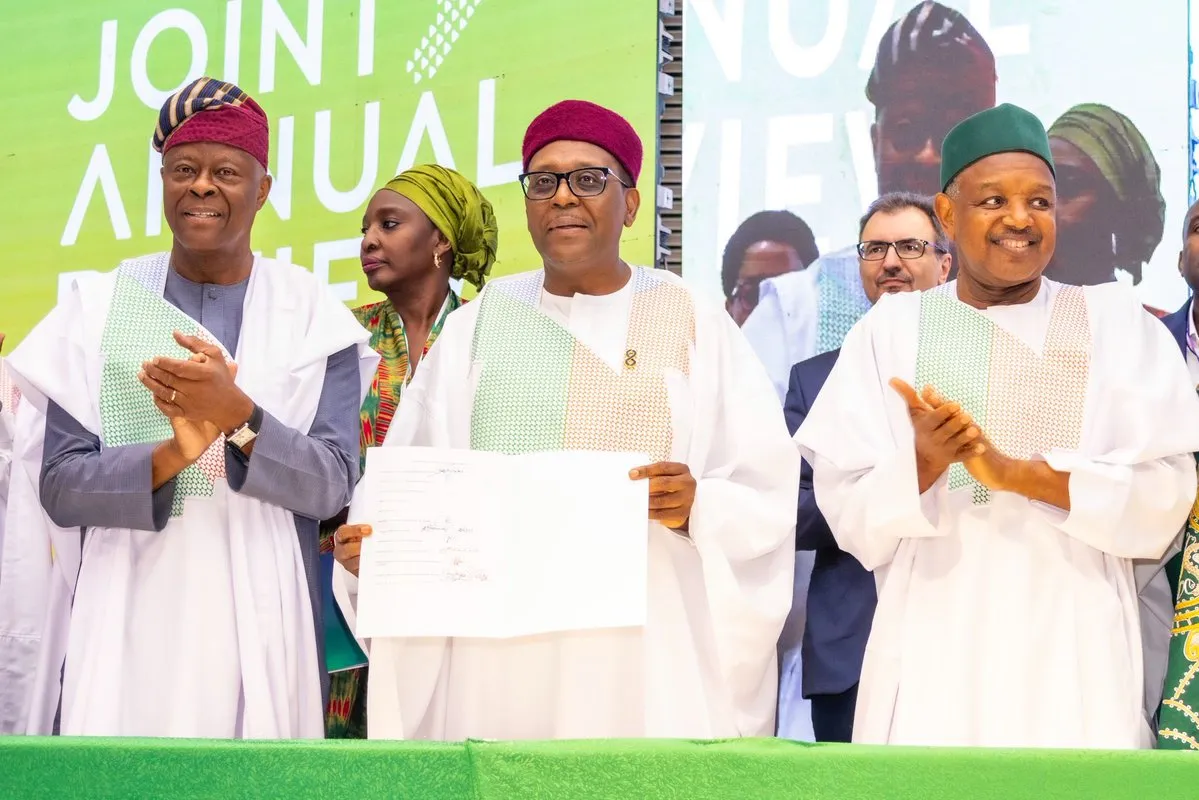
The Federal Government of Nigeria has announced a landmark 60 percent increase in the nation’s health budget, marking one of the most significant healthcare funding commitments in recent Nigerian history and signaling President Bola Ahmed Tinubu’s administration’s determination to revitalize a health sector that has long struggled with chronic underfunding, infrastructure deficits, and workforce challenges. This substantial budget expansion, unveiled at the ongoing 2025 Joint Annual Health Sector Review (JAR) in Abuja, represents a comprehensive effort to transform Nigeria’s healthcare delivery system and address persistent gaps that have undermined the nation’s ability to provide quality, accessible medical services to its over 200 million citizens.
Build the future you deserve. Get started with our top-tier Online courses: ACCA, HESI A2, ATI TEAS 7, HESI EXIT, NCLEX-RN, NCLEX-PN, and Financial Literacy. Let Serrari Ed guide your path to success. Enroll today.
Measurable Progress Under the Renewed Hope Agenda
Speaking at the high-level gathering of health sector stakeholders, the Coordinating Minister of Health and Social Welfare, Prof. Muhammad Ali Pate, emphasized that the reforms being implemented under President Tinubu’s Renewed Hope Agenda are already generating measurable, tangible results across multiple health indicators. These outcomes provide empirical validation for the government’s reform approach and demonstrate that increased financial commitments, when paired with strategic implementation, can translate into real improvements in population health outcomes.
“We are proud to report that 84 percent of key health reform indicators are on track,” Minister Pate declared, presenting a comprehensive overview of progress achieved across Nigeria’s complex healthcare landscape. Among the most significant achievements, maternal mortality has declined by 17 percent across 172 high-burden local government areas (LGAs), while newborn deaths have fallen by 12 percent in these same priority areas. These reductions in maternal and neonatal mortality represent crucial progress toward Nigeria’s commitments under the Sustainable Development Goals, particularly SDG 3, which targets substantial reductions in preventable deaths of mothers and children.
The minister stressed that sustaining this momentum requires continued investment, political commitment, and operational focus on the intervention strategies that have proven effective in reducing these preventable deaths. Maternal and neonatal mortality have historically represented some of Nigeria’s most stubborn public health challenges, with the country accounting for a disproportionate share of global maternal deaths despite representing only about 2.6 percent of the world’s population.
Ambitious Financing Plans for Vaccine Procurement and Health Security
Looking ahead to the near-term future, the Tinubu administration has outlined ambitious plans to mobilize ₦150 billion over the next two years specifically designated for vaccine procurement, epidemic preparedness capabilities, and strengthening Nigeria’s overall health security architecture. This substantial financial commitment addresses critical vulnerabilities exposed by recent disease outbreaks, including the COVID-19 pandemic, which revealed severe gaps in Nigeria’s capacity to respond effectively to public health emergencies.
The planned investment in vaccine procurement will support routine immunization programs that protect children against preventable diseases like measles, polio, diphtheria, and yellow fever, while also building strategic reserves of vaccines needed to respond rapidly to emerging epidemic threats. Nigeria’s National Primary Health Care Development Agency (NPHCDA) will play a central role in managing vaccine distribution and ensuring that immunization services reach children in even the most remote and underserved communities across the country’s diverse geographic landscape.
Epidemic preparedness investments will focus on building laboratory diagnostic capacity, training emergency response teams, establishing disease surveillance systems capable of detecting outbreaks early, and creating stockpiles of medical supplies and personal protective equipment that can be rapidly deployed when threats emerge. These capabilities represent essential infrastructure for protecting Nigerians from infectious disease threats that could otherwise trigger widespread illness, death, and economic disruption.
Strengthening Health System Infrastructure and Human Resources
Minister Pate highlighted several concrete achievements demonstrating the government’s commitment to rebuilding Nigeria’s health system foundations. Thirty-five of Nigeria’s 36 states now conduct annual health reviews, creating mechanisms for evidence-based planning and accountability that were previously absent in many jurisdictions. Additionally, all 36 states plus the Federal Capital Territory have developed operational health plans aligned with national priorities, ensuring coordination across different levels of government.
Perhaps most significantly, over 15,000 new health workers have been recruited across the country, helping to address the severe shortage of doctors, nurses, midwives, and other healthcare professionals that has plagued Nigeria’s health system for decades. This workforce expansion represents a critical investment in human capital, recognizing that even the best-equipped facilities cannot deliver quality care without adequate numbers of trained, motivated health professionals.
The government has also revitalized 435 primary healthcare facilities, bringing essential infrastructure upgrades, medical equipment, and supplies to frontline health centers that serve as the first point of contact for millions of Nigerians seeking care. These facility improvements have contributed to a 33 percent increase in access to skilled birth attendants, helping to drive the reductions in maternal and neonatal mortality that Minister Pate highlighted.
Dramatic Expansion in Healthcare Utilization
One of the most striking indicators of the reforms’ impact comes from utilization data for facilities funded through the Basic Health Care Provision Fund (BHCPF), a dedicated funding mechanism established to ensure sustainable financing for primary healthcare services. Patient visits to BHCPF-funded facilities have surged from just 10 million in early 2024 to an impressive 45 million by mid-2025, representing a more than fourfold increase in less than 18 months.
This dramatic expansion in healthcare utilization reflects both improved facility readiness to deliver quality services and growing public confidence in the government health system. For years, many Nigerians avoided public health facilities due to perceptions of poor quality, lack of essential medicines and supplies, indifferent or poorly trained staff, and inadequate infrastructure. The substantial increase in facility visits suggests these negative perceptions are beginning to shift as tangible improvements become visible to communities across the country.
Immunization coverage has also improved substantially, with measles, yellow fever, and HPV vaccines reaching more children and adolescents than in previous years. These improvements in immunization rates will generate long-term health benefits by protecting cohorts of young Nigerians from diseases that can cause death, disability, or chronic health problems. Additionally, family planning uptake has increased by 10 percent, supporting women’s reproductive autonomy and helping families make informed decisions about childbearing that align with their economic circumstances and personal preferences.
One decision can change your entire career. Take that step with our Online courses in ACCA, HESI A2, ATI TEAS 7, HESI EXIT, NCLEX-RN, NCLEX-PN, and Financial Literacy. Join Serrari Ed and start building your brighter future today.
Rebuilding Public Trust and Workforce Morale
Minister Pate disclosed that citizen trust in government health reforms has climbed to 55 percent, while patient satisfaction now stands at 74 percent, according to recent survey data. These metrics represent significant improvements from the deep skepticism that previously characterized public attitudes toward government healthcare initiatives, reflecting both the visible improvements in service delivery and the government’s efforts to communicate transparently about reform progress and challenges.
Addressing one of the health sector’s most persistent challenges, President Tinubu has approved over ₦50 billion to clear outstanding allowances and address workforce issues that have undermined morale and triggered strikes for years. Healthcare workers across Nigeria have frequently protested delayed salary payments, unpaid allowances, poor working conditions, and inadequate equipment and supplies. These workforce grievances have periodically disrupted health services, with doctors, nurses, and other professionals withdrawing their labor to demand better treatment.
“This reflects a sincere commitment to rebuilding trust within the health workforce,” Minister Pate emphasized, acknowledging that sustainable health system improvements require motivated, fairly compensated health professionals who feel valued by the government they serve. The ₦50 billion allocation signals recognition that human resources represent the health system’s most valuable asset and that investment in workforce welfare generates returns through improved productivity, reduced turnover, and better patient care.
Dramatic Budget Expansion and Sectoral Prioritization
The Coordinating Minister of the Economy and Finance, Wale Edun, provided detailed financial context for the health budget expansion, noting that the 2025 federal health budget grew by nearly 60 percent compared to previous years. Most dramatically, allocations to the Basic Health Care Provision Fund are projected to rise from ₦131.5 billion in 2024 to ₦299 billion in 2026, more than doubling in just two fiscal years.
“This increase marks a significant step in restoring confidence in Nigeria’s health system,” Minister Edun stated, emphasizing that the budget expansion reflects deliberate policy choices to prioritize social sectors. The health sector’s share of Nigeria’s total national budget has grown from just over 3 percent to 5.2 percent, moving gradually toward the 15 percent target established by African Union member states in the 2001 Abuja Declaration, though significant gaps remain.
Minister Edun contextualized the health budget increases within the government’s broader economic strategy, which focuses on removing distortions that have hindered growth, stabilizing macroeconomic conditions, and ensuring that economic gains translate into tangible improvements in Nigerians’ quality of life. “Distortions are being removed, the economy is stabilizing, and social sectors are benefiting significantly,” he explained.
However, Edun also emphasized that sustainable health system financing cannot rely solely on federal government allocations. “States and Local Governments must also commit a greater share of their revenues to health,” he stressed, noting that Nigeria’s federal structure requires all three tiers of government to contribute appropriately to healthcare financing. Many state and local governments currently allocate minimal budgets to health, undermining service delivery in the facilities they manage despite receiving substantial monthly allocations from federally collected revenues.
Addressing Nigeria’s Revenue Challenge
Minister of Budget and Economic Planning, Sen. Atiku Bagudu, highlighted a fundamental constraint undermining Nigeria’s capacity to adequately fund health and other social sectors: the country’s persistently low revenue-to-GDP ratio, which has remained below 8 percent since 2007. This metric, which measures government revenue as a percentage of economic output, stands far below the levels achieved by comparable developing countries and developed nations, where ratios of 15-30 percent or higher are common.
Nigeria’s low revenue mobilization reflects multiple factors including narrow tax bases, widespread tax evasion, inefficient collection systems, exemptions and incentives that erode revenue potential, and an economy where large informal sectors operate outside formal taxation frameworks. The oil sector, despite generating substantial export revenues, has faced production challenges, theft, and volatile international prices that make it an unreliable revenue foundation.
Senator Bagudu explained that the Tinubu administration is addressing this revenue challenge through comprehensive reforms aimed at improving tax collection efficiency, expanding the tax base, reducing exemptions, and diversifying revenue sources beyond oil. These efforts will be critical for generating the sustained funding increases necessary to meet Nigeria’s development needs across health, education, infrastructure, and other priority sectors.
The minister also highlighted development of a new 2026-2050 National Development Plan that integrates health, education, and human capital development as central pillars of Nigeria’s long-term growth strategy. This planning framework recognizes that sustained economic progress depends fundamentally on having a healthy, educated population with the skills and capabilities to drive productivity growth and innovation.
Through World Bank-supported ward-level mapping initiatives, all 8,809 wards across Nigeria’s 774 local government areas will have coordinated health plans that feed into state and national priorities. “This will enhance accountability and improve results at the grassroots,” Senator Bagudu explained, noting that decentralized planning processes can better reflect local needs and conditions while maintaining alignment with broader strategic objectives.
Digital Innovation and Strategic Policy Reforms
Minister of State for Health and Social Welfare, Dr. Adekunle Salako, emphasized that the Renewed Hope Agenda is transforming Nigeria’s health landscape through infrastructure upgrades, workforce expansion, and digital innovation that modernizes how health services are planned, delivered, and monitored. “The Renewed Hope Agenda is not just a promise; it is a covenant to safeguard the health of our people,” Dr. Salako declared, framing health sector reforms as a fundamental commitment rather than merely aspirational goals.
The minister disclosed that the government has implemented over 500 high-impact projects spanning disease control, maternal and child health, nutrition, water and sanitation, and health system strengthening. Additionally, the administration has established 13 new tertiary health institutions and six specialized cancer centers of excellence, expanding capacity to diagnose and treat malignancies that have historically forced wealthy Nigerians to seek treatment abroad while leaving the poor with no access to life-saving cancer care.
The government has also rolled out 21 strategic policies driving comprehensive health system reforms, addressing issues ranging from pharmaceutical regulation to health insurance expansion to quality assurance mechanisms. These policy frameworks create enabling environments for improved health outcomes by establishing clear standards, accountability mechanisms, and coordination structures.
Dr. Salako highlighted that full implementation of the National Health Sector Renewal and Investment Initiative (NHSRII) could save Nigeria an estimated ₦4.8 trillion annually from preventing diseases that currently impose massive treatment costs on individuals, families, and the health system. Additionally, the initiative could potentially retain ₦850 billion currently lost to medical tourism, where Nigerians travel abroad—primarily to India, Europe, and the United States—for treatments unavailable or perceived as inadequate within the country.
Civil Society Perspectives and Accountability Concerns
Delivering a goodwill message at the health sector review, Dr. Mohammed Lecky, Chairperson of the Health Sector Reform Coalition (HSRC), a prominent civil society organization, commended the government for the substantial budget increase but urged vigilance regarding actual fund releases and effective utilization. “We must not be celebrating increases of budget on paper alone but in releases and utilisation,” Dr. Lecky warned, highlighting persistent problems where budgeted funds fail to be released in timely fashion or, when released, are not spent efficiently on intended purposes.
This distinction between budget allocations and actual expenditures represents a critical governance challenge in Nigeria, where budget implementation rates frequently fall significantly below 100 percent due to revenue shortfalls, bureaucratic delays, poor procurement processes, or outright corruption. Civil society organizations have consistently advocated for stronger budget tracking mechanisms and public access to expenditure data that would enable citizens to hold the government accountable for translating budget commitments into actual service delivery.
Dr. Lecky expressed particular concern about declining external health aid, which he noted has fallen by as much as 40 percent compared to 2023 levels. This sharp reduction in donor funding has disrupted critical health services including immunization programs, maternal care initiatives, and disease surveillance systems that have historically depended partly on external support from organizations like USAID, the Global Fund, Gavi, and bilateral donors.
The declining donor assistance reflects multiple factors including competing global priorities, donor countries’ domestic fiscal pressures, and a general trend toward graduation of middle-income countries like Nigeria from concessional aid. While this transition toward greater self-reliance aligns with development objectives, it creates short-term funding gaps that governments must fill through increased domestic resource mobilization.
“The BHCPF has become an anchor for reforms across all levels of government, showing what is possible when funds are made available. However, the sector still needs significantly more money,” Dr. Lecky emphasized, noting that even with the 60 percent budget increase, Nigeria’s health financing remains inadequate for the country’s vast population and enormous disease burden.
Dr. Lecky called for innovative financing mechanisms including health insurance expansion, sin taxes on tobacco and alcohol, dedicated health levies, public-private partnerships, and diaspora bonds that could mobilize additional resources beyond conventional budget allocations. He also stressed the need for stronger accountability mechanisms including independent monitoring, transparent reporting, civil society oversight, and consequences for officials who mismanage health resources.
“Health is still not a very high political and funding priority. We all, especially the CSOs, have a huge responsibility to advocate for more funds and ensure every naira counts,” Dr. Lecky concluded, acknowledging that sustained advocacy will be necessary to maintain and expand political commitment to health sector financing.
Conclusion: A Pivotal Moment for Nigerian Healthcare
Nigeria’s 60 percent health budget increase represents a pivotal moment in the country’s ongoing efforts to build a health system capable of meeting its population’s needs. The substantial financial commitment, combined with strategic reforms addressing workforce, infrastructure, governance, and service delivery, creates genuine opportunities for transformative improvements in how Nigerians access and experience healthcare.
However, translating increased budgets into sustained health gains will require vigilant implementation, transparent accountability, continued political prioritization, and sustained engagement from civil society organizations and communities. The coming years will reveal whether Nigeria can capitalize on this moment of opportunity to fundamentally strengthen a health system that has underperformed for too long, or whether the familiar patterns of inefficient implementation and diverted resources will undermine even well-intentioned reform efforts.
For millions of Nigerians who depend on government health facilities for essential care, the stakes could not be higher. The promise of expanded budgets and ambitious reforms must ultimately be measured not in policy documents or ministerial speeches, but in reduced child mortality, improved maternal health, better disease control, and dignified, effective healthcare accessible to all citizens regardless of economic status or geographic location.
Ready to take your career to the next level? Join our Online courses: ACCA, HESI A2, ATI TEAS 7 , HESI EXIT , NCLEX – RN and NCLEX – PN, Financial Literacy!🌟 Dive into a world of opportunities and empower yourself for success. Explore more at Serrari Ed and start your exciting journey today! ✨
Track GDP, Inflation and Central Bank rates for top African markets with Serrari’s comparator tool.
See today’s Treasury bonds and Money market funds movement across financial service providers in Kenya, using Serrari’s comparator tools.
Photo source: Google
By: Montel Kamau
Serrari Financial Analyst
17th November, 2025