
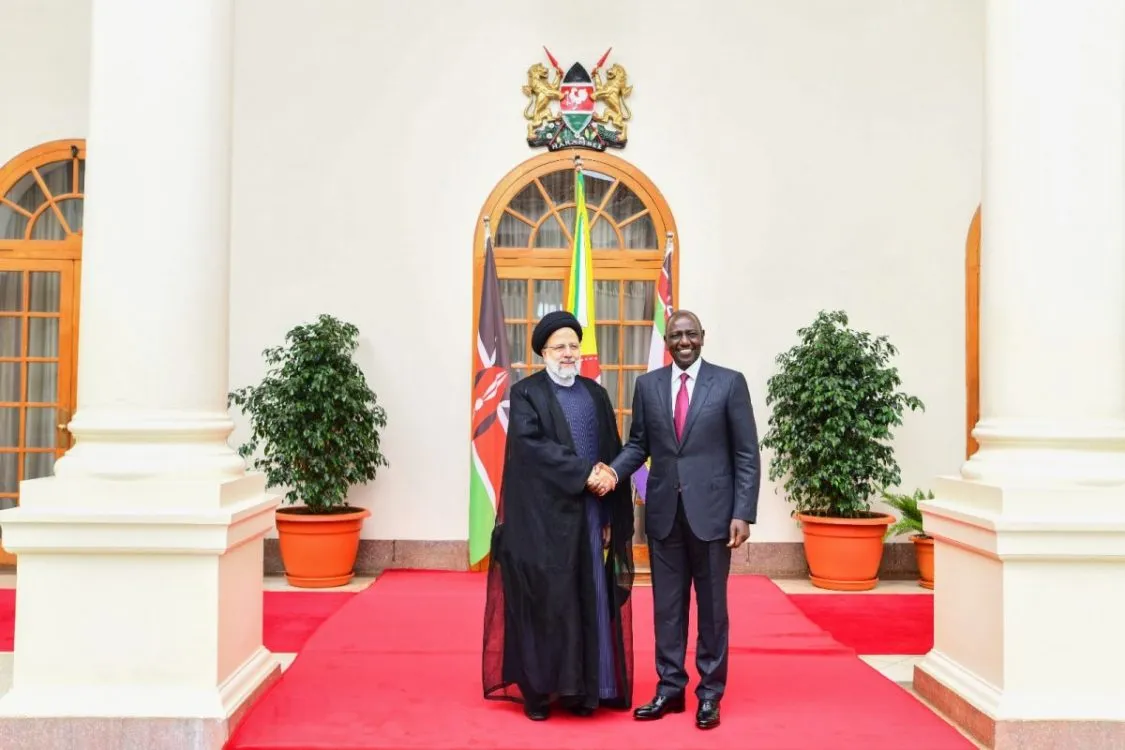
Iran has made a significant statement regarding its long-term economic strategy in Africa, declaring Kenya as its primary gateway to the lucrative East African market. This declaration, made by Iranian Agriculture Minister Qolamreza Nouri Ghezeljeh during a high-profile visit to Nairobi, marks a pivotal moment in the relationship between the two nations. At the heart of this new engagement is a determined effort to elevate bilateral trade from its current “unsatisfactory” levels to a new, multi-billion-dollar future. The minister’s visit, which included a 100-member economic delegation, coincides with the two-day Joint Economic Cooperation Commission (JCC) meeting—the first to be held in Kenya in over a decade—underscoring the seriousness of Tehran’s intent.
Push boundaries, reach goals, achieve more. Whether it’s ACCA, HESI A2, ATI TEAS 7, HESI EXIT, NCLEX-RN, NCLEX-PN, or Financial Literacy, we’ve got the Online course to match your ambition. Start with Serrari Ed now.
The historical context of Iran-Kenya relations has been marked by periods of both cooperation and friction. While diplomatic ties have existed for decades, and memorandums of understanding have been signed in the past on topics ranging from energy to technology, trade volumes have often been hampered by external pressures, most notably the impact of international sanctions on Iran. For example, a significant oil deal in 2012 was cancelled by Kenya following warnings from Western countries. However, recent developments, including a concerted effort by Iran to re-engage with the continent and the signing of several new agreements in July 2023 covering information technology, fisheries, and investment, have set the stage for the current push. This renewed focus reflects a broader shift in Iran’s foreign policy, which increasingly views Africa as a key partner for trade and economic diversification.
Kenya’s Role as a Regional Economic Powerhouse
The choice of Kenya as the central pillar of Iran’s East Africa strategy is no accident. Kenya’s strategic position on the Indian Ocean coast provides direct access to major international shipping routes, making its port of Mombasa a critical logistics hub for the entire region. The minister’s remarks highlighted this, noting that Kenya offers Iran access to a regional market of over 350 million people. This vast market is primarily composed of the East African Community (EAC) member states, which include Uganda, Tanzania, Rwanda, Burundi, South Sudan, and the Democratic Republic of Congo (DRC). Through its membership in regional blocs like the EAC and the Common Market for Eastern and Southern Africa (COMESA), as well as its participation in the broader African Continental Free Trade Area (AfCFTA), Kenya is uniquely positioned to act as a springboard for foreign companies seeking to tap into the continent’s immense potential.
Kenya’s appeal extends beyond its geography. The country has a relatively diversified economy, a well-developed private sector, and a government that has actively pursued pro-business reforms to improve its ease of doing business. Major infrastructure projects, such as the Standard Gauge Railway (SGR) that connects the port of Mombasa to the capital city of Nairobi and beyond, have significantly improved the efficiency of cargo movement. Furthermore, the establishment of Special Economic Zones (SEZs) and a focus on digital infrastructure have created a more attractive investment environment. These factors collectively cement Kenya’s reputation as a stable and reliable economic hub, capable of facilitating large-scale trade and investment with partners like Iran.
Build the future you deserve. Get started with top-tier Online courses in ACCA, HESI A2, ATI TEAS 7, HESI EXIT, NCLEX-RN, NCLEX-PN, and Financial Literacy. Let Serrari Ed guide your path to success. Enroll today.
Bridging the Trade Deficit: Current State and Future Goals
The current state of bilateral trade between Iran and Kenya, as both countries acknowledge, is far from its full potential. While the Iranian minister cited an informal trade value of over $300 million, official data paints a more detailed picture. In 2023, Kenya’s exports to Iran were valued at approximately $48 million, dominated by products like tea, sheep and goat meat, and coffee. Meanwhile, Iran’s exports to Kenya stood at around $28.4 million, consisting mainly of asphalt mixtures, petroleum coke, and pasta. This represents a significant trade surplus for Kenya and a decline in Iran’s exports over the past five years.
The ambition to dramatically increase these figures is a central theme of the JCC meeting. The immediate goal is to boost trade to over $1 billion, with a long-term vision of reaching “several billion dollars.” This aspirational target reflects a belief that by leveraging their respective industrial, agricultural, and logistical strengths, the two nations can create a more balanced and robust trade relationship. Iran, with its strong capabilities in pharmaceuticals, industry, and technology, sees a clear opportunity to meet Kenya’s import needs, while Kenya aims to grow its exports, particularly in its flagship tea sector. The Iranian delegation’s composition, which includes major companies from these key sectors, is a testament to this strategic focus.
Addressing Barriers to Trade: Banking, Logistics, and Quality Control
To achieve the ambitious trade goals, both Iran and Kenya recognize that significant barriers must be overcome. The Iranian minister explicitly called for a swift resolution to banking and barter trade issues, which have historically been a major impediment. The international sanctions regime has made it difficult for Kenyan banks to process transactions with Iranian counterparts, forcing trade to rely on informal and less secure channels. The establishment of a more formal and reliable financial mechanism is therefore a critical step. While a fully integrated banking system may be challenging, a structured barter trade system or a joint fund could serve as a viable alternative, reducing the reliance on traditional currency exchanges.
Beyond finance, logistical challenges also exist. The recent JCC meeting led to a crucial agreement to form a joint committee to address these issues within a 60-day timeframe. One of the most pressing concerns has been a past ban on Kenyan tea imports to Iran, which stemmed from a criminal trade malpractice. A Kenyan company was found to have imported low-grade tea, blended it, and then re-exported it to Iran as high-grade Kenyan tea. This incident not only caused a diplomatic dispute but also highlighted the need for stricter quality control and regulatory oversight. The newly formed joint committee will work to develop a framework to restore trust and ensure compliance with quality standards, with the ultimate goal of resuming and expanding tea exports to Iran, a key market for Kenya’s agricultural sector.
The Broader Iran-Africa Strategy and Future Outlook
The Iranian push into Kenya is part of a much larger, continent-wide strategy. Iran has been actively increasing its engagement with African nations, with its total non-oil trade with Africa in 2024 standing at approximately $1 billion. The goal, as stated by various Iranian officials, is to increase this to over $10 billion in the future. To support this, Iran has established a joint Iran-Africa development fund aimed at attracting $2 billion in investment and providing insurance coverage to reduce commercial risks. Other initiatives include establishing shipping lines, launching air routes, and offering export incentives.
The long-term vision for Iran-Kenya cooperation is to move beyond simple bilateral trade and into deeper strategic partnerships. Iran aims to transfer expertise, knowledge, and technology to Kenya, especially in areas like water-efficient farming and agricultural technology. The Iranian delegation’s focus on pharmaceuticals, for example, could lead to joint ventures and knowledge sharing that would benefit Kenya’s healthcare sector.
The success of these initiatives will depend heavily on the political will of both governments to dismantle trade barriers and foster a stable environment for their private sectors to operate. The enthusiastic tone from both sides during the recent JCC meeting, coupled with concrete agreements like the formation of the 60-day joint committee, suggests a strong commitment to moving forward. If successful, this partnership could not only unlock significant economic opportunities for both countries but also fundamentally reshape the trade landscape of East and Central Africa, with Nairobi at its very core.
Ready to take your career to the next level? Join our dynamic courses: ACCA, HESI A2, ATI TEAS 7 , HESI EXIT , NCLEX – RN and NCLEX – PN, Financial Literacy!🌟 Dive into a world of opportunities and empower yourself for success. Explore more at Serrari Ed and start your exciting journey today! ✨
Track GDP, Inflation and Central Bank rates for top African markets with Serrari’s comparator tool.
See today’s Treasury bonds and Money market funds movement across financial service providers in Kenya, using Serrari’s comparator tools.
Photo source: Google
By: Montel Kamau
Serrari Financial Analyst
14th August, 2025