
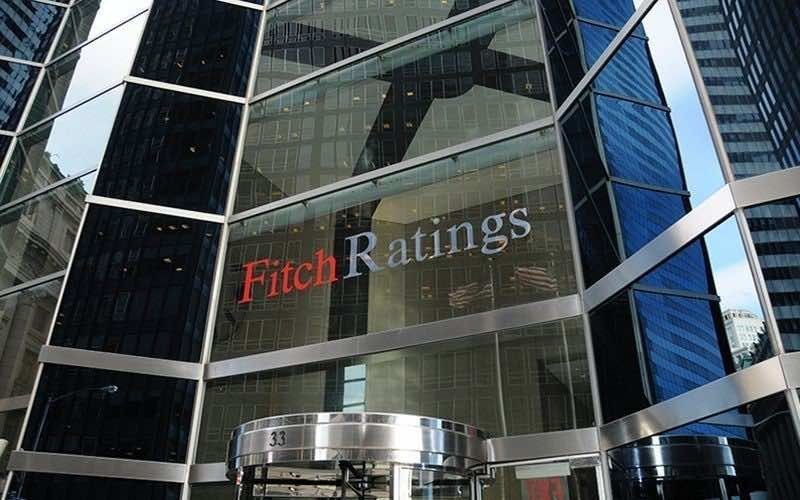
Ethiopia finds itself in a precarious financial position as Fitch Ratings delivers a sobering blow by downgrading its Long-Term Foreign-Currency Issuer Default Rating (LTFC IDR) to ‘RD’ (Restricted Default) from ‘C.’ This decision, prompted by the Ethiopian government’s failure to meet the USD33 million Eurobond coupon payment due on December 11, 2023, signals a critical juncture for the nation’s economic stability.
The downgrade extends beyond the LTFC IDR to include the issue rating of Ethiopia’s USD1 billion Eurobond, now marked as ‘D.’ This move underscores the severity of the government’s inability to fulfill its financial obligations within the 14-day grace period, which concluded on December 25, 2023.
In response to the crisis, the Ministry of Finance has initiated an engagement process with Eurobond holders. A global investor call held on December 14, 2023, aimed to transparently communicate the government’s position as it seeks an agreement on restructuring with bondholders. The objective is to reach a resolution ahead of a Common Framework (CF) debt treatment.
Ethiopia had previously engaged in diplomatic efforts, securing an interim suspension of debt service payments with major Chinese creditors. A parallel agreement with other bilateral creditors on the Official Creditor Committee (OCC) was reached in November.
However, the looming challenge lies in the unresolved parameters for an International Monetary Fund (IMF) program. This program is a prerequisite for negotiating a comprehensive debt treatment under the CF. While optimism surrounds expectations for an IMF program in 1Q24, the Official Creditor Committee maintains the right to cancel the debt service suspension if an agreement is not reached by end-March 2024.
In contrast, the Long-Term Local-Currency (LTLC) IDR remains stable at ‘CCC-,’ indicating the government’s commitment to servicing its local-currency debt. Notably, there is no indication of including domestic debt in the restructuring. However, this rating acknowledges the significant risk of default due to heightened macroeconomic imbalances and liquidity strains.
The Environmental, Social, and Governance (ESG) landscape adds complexity to Ethiopia’s predicament. Scores of ‘5’ for Political Stability and Rights, Rule of Law, Institutional and Regulatory Quality, and Control of Corruption underscore challenges such as weak political transitions, limited rights for political participation, institutional weaknesses, and high corruption levels.
Looking ahead, the economic outlook for Ethiopia remains uncertain. Negative rating actions loom if default on local-currency debt becomes probable. Positive rating actions, on the other hand, hinge on successfully navigating a commercial debt restructuring that normalizes relations with private-sector creditors and effectively addresses fiscal and macroeconomic challenges.
Photo (Jihane Rahhou via www.moroccoworldnews.com)
By: Montel Kamau
Serrari Financial Analyst
28th December, 2023