
In a strategic move to bolster the stability and resilience of Kenya’s financial sector, the National Treasury is actively considering a revision of commercial banks’ core capital requirements. The current minimum threshold, set at Sh1 billion since 2012, is under scrutiny, signaling potential consolidation activities among smaller lenders.
Outlined in the 2024 draft Budget Policy Statement (BPS), this move signifies the government’s dedication to cultivating a robust banking sector capable of supporting substantial projects. In tandem, the Central Bank of Kenya (CBK) is contemplating a comprehensive review of licensing fees for commercial banks and mortgage financiers.
The adjustment aims to fortify the banking sector’s resilience, effectively mitigating the risk of institutional failures. Institutions maintaining a higher core capital buffer are perceived as more robust and less vulnerable to economic downturns.
As of September 2023, Consolidated Bank of Kenya stands as the sole institution falling short of the existing Sh1 billion core capital requirement, facing a deficiency of Sh1.4 billion. Notably, this echoes a 2015 proposal by former National Treasury Cabinet Secretary Henry Rotich, suggesting a fivefold increase in minimum capital requirements to Sh5 billion. However, the proposal faced rejection by Members of Parliament, citing concerns about market concentration.
The impending review acknowledges the evolution of the banking sector since 1990, recognizing the transformative impact of technology and innovations steering banks towards branchless banking. Treasury emphasizes, “The review will consider the changing banking sector landscape, increased supervisory or surveillance costs, and international best practices.”
Industry experts interpret this proposal as a clear commitment to implementing higher capital requirements, positioning Kenya alongside neighboring countries adopting similar policies. Eric Musau, Executive Director of Research at Standard Investment Bank, comments, “There has been talk about consolidation. Maybe this time that element of consolidation is going to happen.”
This move aligns with regional trends, with Uganda already implementing a higher capital adequacy requirement, setting a minimum capital of 150 billion Ugandan Shillings (Sh6.17 billion) to be complied with by the next year. Similarly, Tanzania, South Africa, Nigeria, and Egypt express intentions to adjust their minimum capital requirements, reflecting a broader trend across the African banking landscape. As Kenya navigates this potential shift, industry analysts anticipate a transformative wave in the banking sector, aligning it with contemporary challenges and international benchmarks.
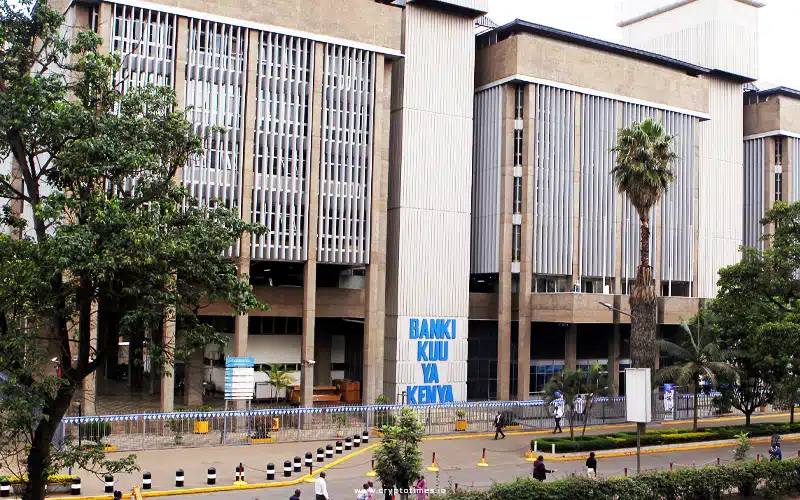
Photo (SHIVRAJ SWAMI via Crypto Times)
By: Montel Kamau
Serrari Financial Analyst
28th December, 2023