
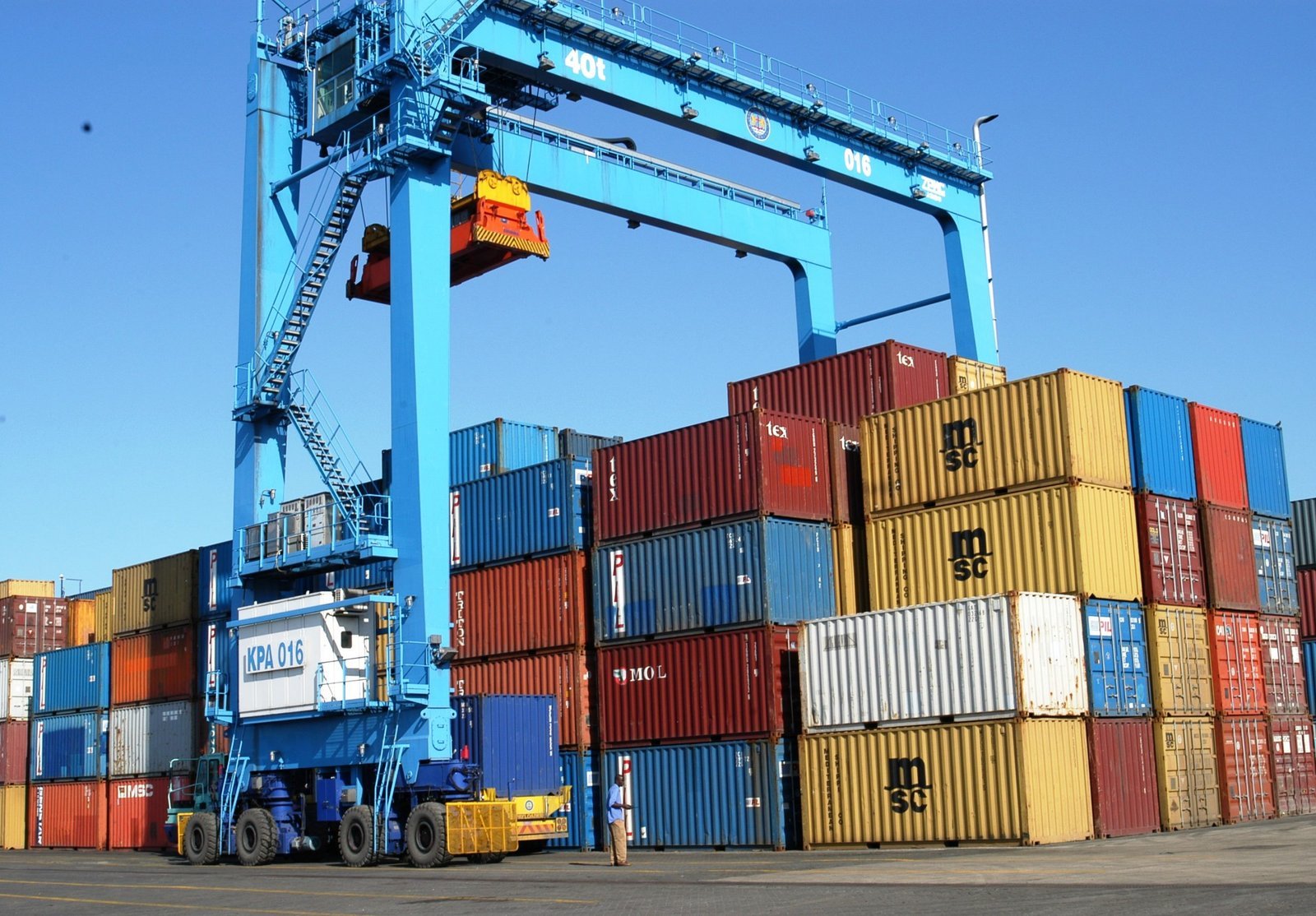
Kenya has reported a notable drop in its import expenditure for the first time since the COVID-19 pandemic, reflecting reduced spending on critical supplies such as factory materials, machinery, and fuel, according to official data.
Between January and July this year, traders spent Ksh 1.43 trillion on foreign goods, down from Ksh 1.46 trillion during the same period last year—a decline of 2.09 percent, equivalent to about Ksh 30.57 billion. This dip coincided with a global moderation in major import prices as supply chains disruptions eased, leading to lower shipping costs.
Global supply chain challenges, particularly exacerbated by the Ukraine-Russia conflict last year, had disrupted trade when nations were grappling with pandemic-induced shocks.
The decline in the import bill was chiefly influenced by a substantial 15.83 percent reduction in spending on intermediate goods used by manufacturers, which amounted to Ksh 212.43 billion compared to Ksh 252.37 billion during the same period in the previous year. Kenyan industries heavily depend on foreign markets for raw materials.
Moreover, Kenya witnessed a year-on-year decrease of 9.68 percent in the value of machinery and transportation equipment, totaling Ksh 237.78 billion, as per provisional data.
The Central Bank of Kenya attributed the machinery spending decline to a slowdown in public investment in infrastructure projects, particularly roads. For instance, the Ruto administration spent Ksh 52.48 billion on road projects in the fiscal year ending in June, compared to the budgeted Ksh 62.88 billion by the previous government.
Public spending on energy projects also contracted significantly, dropping by 62.33 percent to Ksh 24.03 billion, significantly below the original budget, according to separate Treasury data.
Notably, fuel expenditure, a significant driver of the import bill, fell by 5.93 percent to Ksh 356.66 billion over the seven-month period compared to the previous year. This can be attributed to the decrease in Murban crude oil prices, which dropped from around $130 per barrel in March 2022 to about $96 per barrel currently. Kenya imports refined fuel from Murban crude oil, mainly from the United Arab Emirates.
In contrast, food imports surged by 46.97 percent to Ksh 193.01 billion due to a decline in staple crops like maize, rice, wheat, and sugar, caused by reduced production amid drought conditions and increased input costs, including fertilizers.
Despite a slower export growth rate since the onset of the pandemic, the overall reduction in imports helped narrow Kenya’s goods trade deficit—the difference between merchandise exports and imports—by 8.81 percent to Ksh 867.53 billion. This reduction occurred despite export earnings growing at their slowest pace in the post-pandemic era.
Exporters earned Ksh 561.87 billion in the first seven months of the year, marking a 10.47 percent increase from the previous year. However, this growth in export value was slower compared to the corresponding periods in 2022 and 2021, with earnings at Ksh 508.63 billion and Ksh 429.24 billion, respectively.
Notably, Kenya’s largest agricultural export, tea, saw a 7.18 percent increase in revenue to Ksh 99.93 billion during January to July, while horticultural exports witnessed an 8.78 percent rise to Ksh 81.99 billion. However, revenue from coffee exports remained stagnant, decreasing by 1.91 percent to Ksh 26.64 billion, according to data sourced from the Kenya Revenue Authority.
Central Bank of Kenya governor Kamau Thugge commented in August, “We expect exports to increase by about 6.7 percent, mainly driven by tea and horticultural exports. At the same time, we expect imports to remain broadly unchanged.”
Economists emphasize that a persistent trade deficit can hinder job creation for Kenya’s growing skilled youth, as most of the revenue earned within the country is spent on imports, ultimately boosting production and job opportunities in source markets. Additionally, a widening import-export gap puts pressure on the Kenyan shilling, as the demand for dollars outpaces supply.
Kenya has long grappled with narrowing its goods trade deficit, primarily due to its reliance on traditional farm produce exports like tea, horticulture, and coffee, which are primarily sold in their raw form, fetching comparatively lower earnings. This strategy persists due to higher taxes imposed on semi-processed or processed products in destination markets, particularly in Europe, where fears of reduced competitiveness in the global market deter value addition.
Photo Source: Google
By: Montel Kamau
Serrari Financial Analyst
19th September, 2023